Description
Kingstone designs customized robotic buffing systems for automotive roof rails, car luggage-rack rails, and other long decorative trim parts. Each workstation is developed around the workpiece material, geometry, incoming surface condition, required finish, and production target.
Depending on the component, the robot can hold the roof rail against fixed finishing wheels or carry the finishing tool along a fixture-held part. Grinding, polishing, and buffing stages are selected separately to avoid unnecessary processing and achieve a repeatable cosmetic finish.
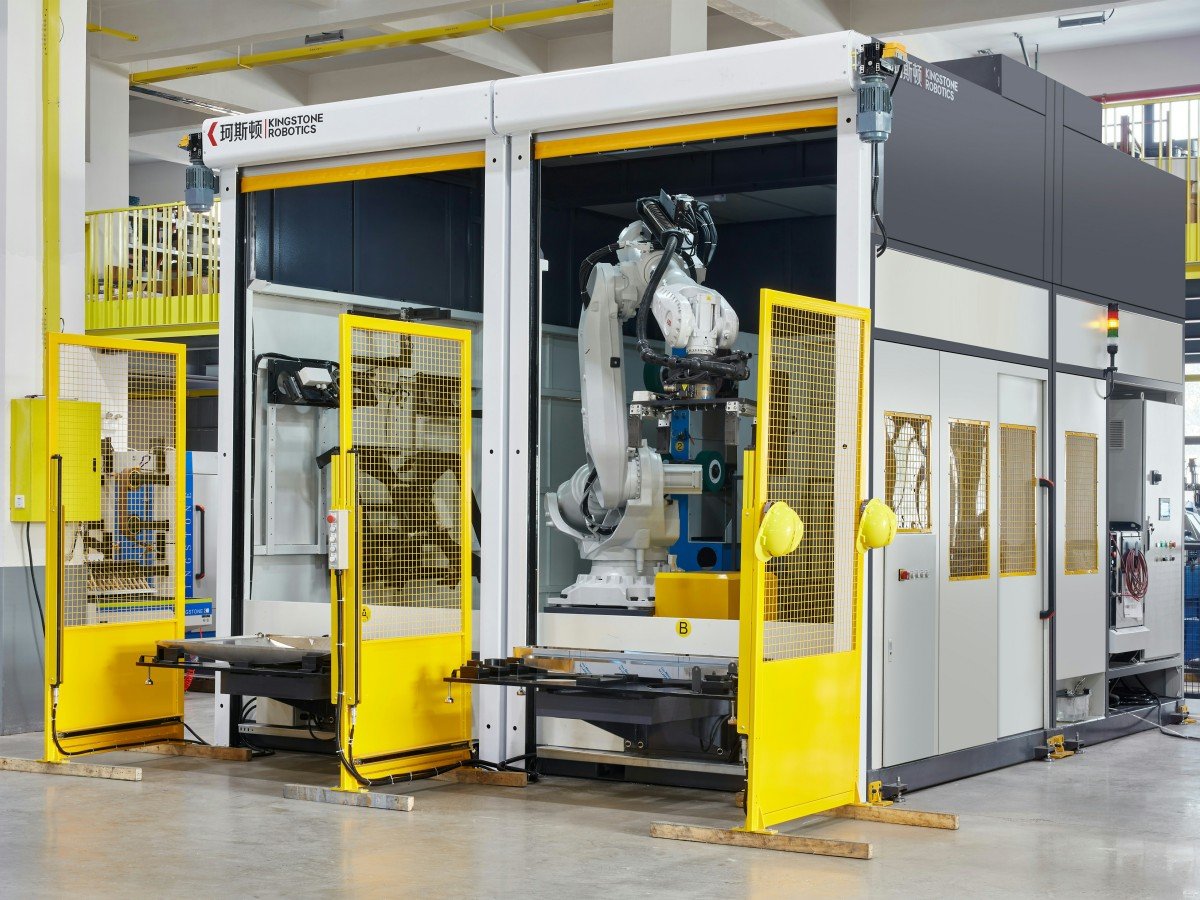
Two workstation layouts are available: robot-held workpiece buffing and fixture-held workpiece processing.
| Item | Typical Configuration |
|---|---|
| Application | Automotive roof rails, luggage-rack rails, and long decorative trim |
| Typical Materials | Aluminum, stainless steel, and other metal profiles subject to sample testing |
| Process Stages | Optional sanding or fine grinding, polishing, and final buffing |
| Workstation Layout | Robot-held workpiece or fixture-held workpiece |
| Robot Brand | ABB, FANUC, or KUKA |
| Finishing Stations | 1–6 stations according to the required process route |
| Consumables | Abrasive belts, flap wheels, sisal wheels, and cloth wheels |
| PLC | Siemens or Schneider |
| Target Finish | Brushed, satin, bright, or mirror-like finish subject to process testing |
| Safety Options | Protective enclosure and compatible dust-extraction system |
Robotic Buffing for Automotive Roof Rails
Automotive roof rails are long, curved, highly visible components. Their main surfaces, edges, and curved transitions require consistent wheel contact, while mounting areas and dimensional features must remain protected. Variations in manual pressure and angle can lead to uneven gloss, residual lines, and inconsistent results between batches.
Our robotic buffing machine solution uses dedicated fixtures, programmed motion, controlled contact pressure, and application-specific consumables to produce a stable finishing process. The system is customized rather than supplied as a fixed standard machine.
Grinding, Polishing, and Buffing Are Different Process Stages
The required process route depends on the condition of the incoming roof rail.
- Grinding or sanding removes deeper scratches, surface marks, oxidation, or other visible defects when required.
- Polishing refines the abrasive pattern and prepares the surface for the specified appearance.
- Buffing uses sisal or cloth wheels to improve gloss and produce the final bright or mirror-like finish. Buffing alone is not intended to remove deep defects.
- Final inspection verifies surface consistency against an approved sample, roughness requirement, gloss target, or visual acceptance standard.
Some roof rails require only final buffing. Others need a multi-stage robotic grinding and polishing system before the final buffing stage.
Two Robotic Workstation Configurations
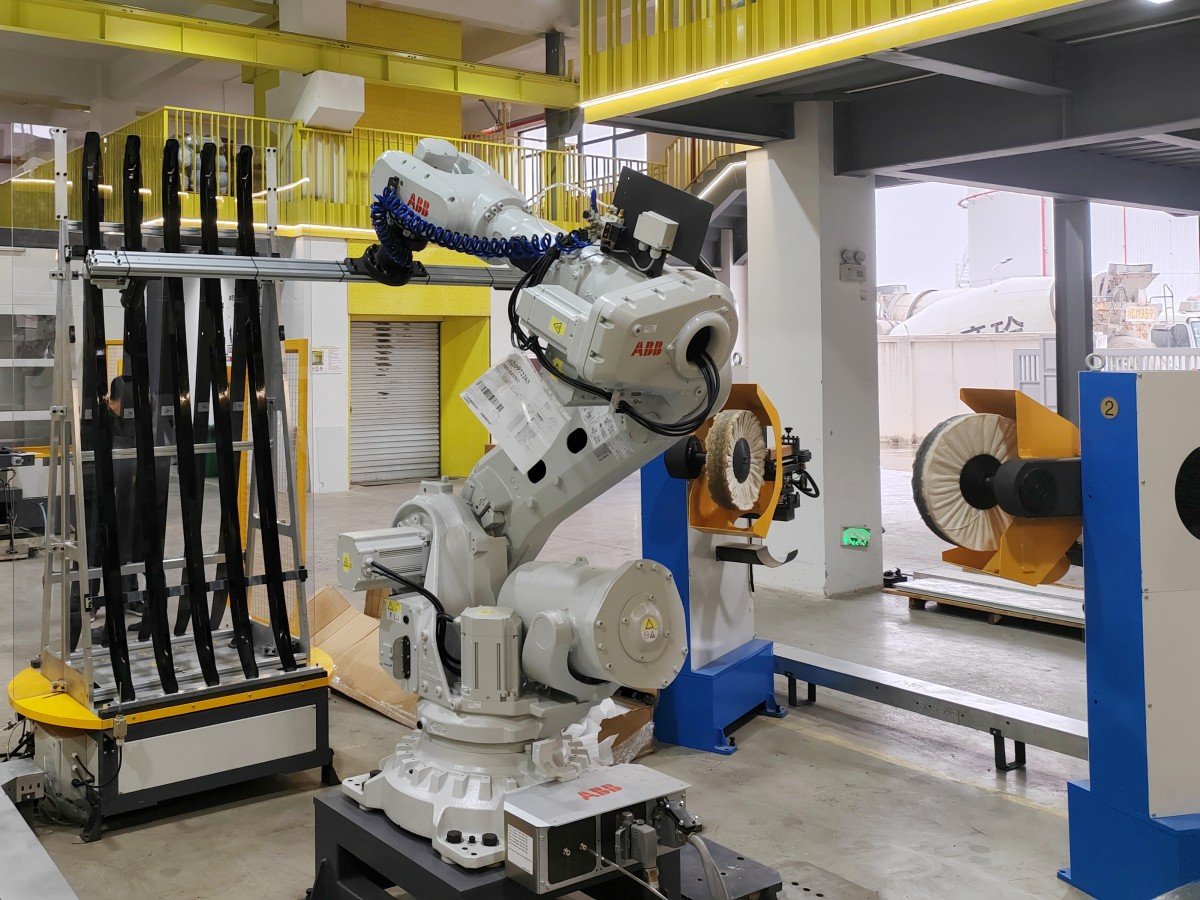
1. Robot-Held Roof Rail with Fixed Buffing Wheels
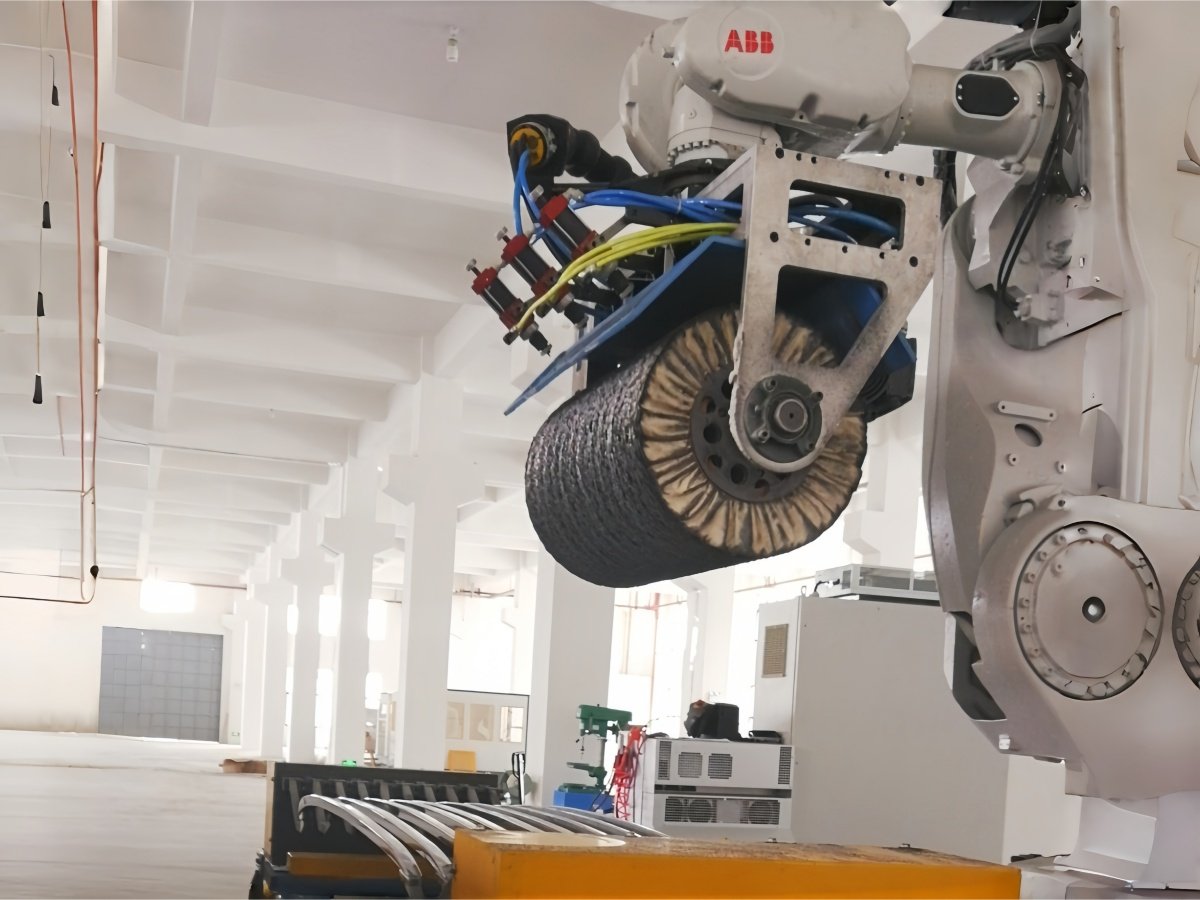
The robot grips one roof rail with a dedicated fixture and presents each required surface to stationary polishing or buffing wheels. Different wheel stations can be arranged for separate process stages.
This configuration provides controlled orientation along long curved profiles and allows the robot to maintain repeatable contact with the selected wheel.
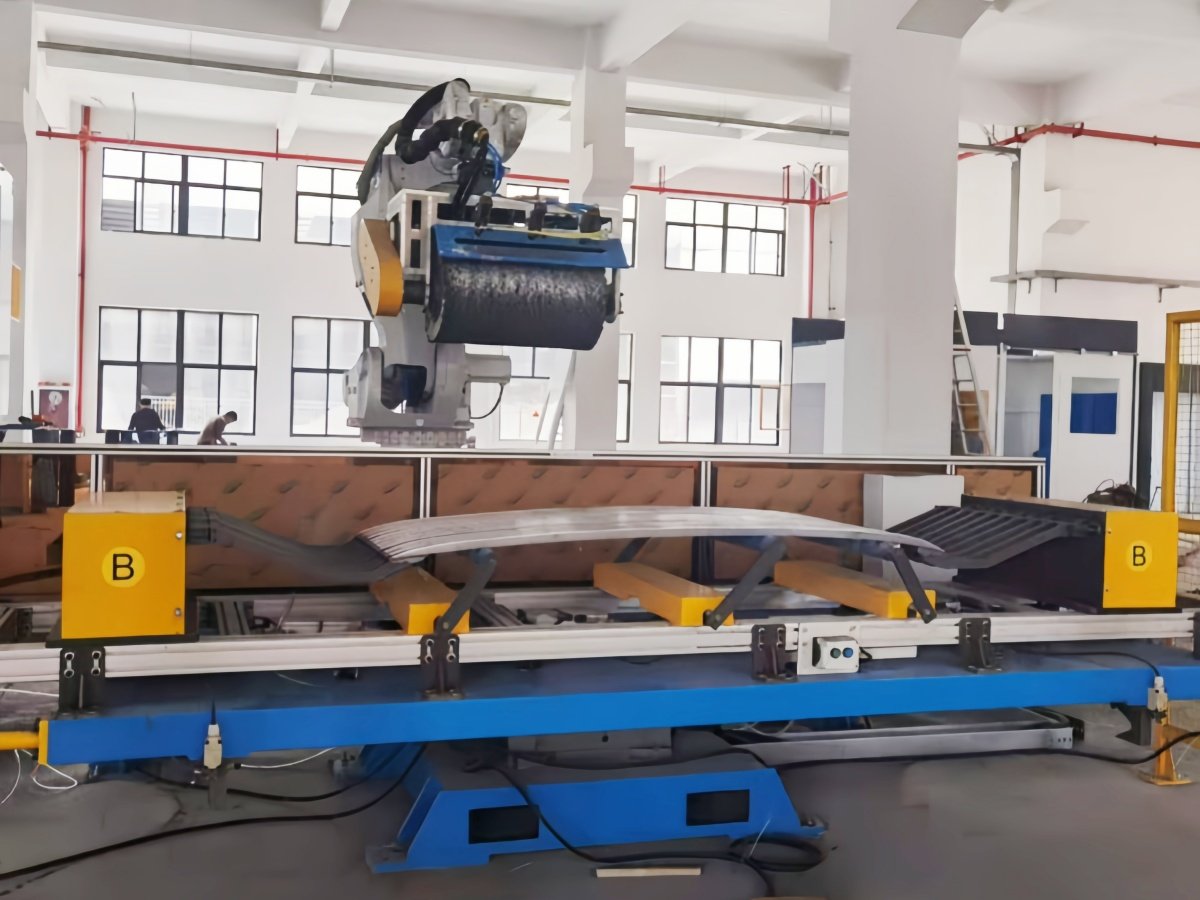
2. Fixture-Held Roof Rail with a Robot-Mounted Finishing Tool
One or more components are secured on a fixture while the robot carries the grinding, polishing, or buffing tool along the programmed path.
This method may be selected for large assemblies, long components, or applications where a fixed loading position provides better access. The final layout is determined after reviewing part length, rigidity, accessible surfaces, model variation, and required cycle time.
What Kingstone Customizes
Each automotive roof rail project can include:
- Workpiece gripping and fixture design
- Robot reach and workstation layout planning
- Tool path, contact angle, pressure, and speed settings
- Selection of abrasive belts, flap wheels, sisal wheels, or cloth wheels
- Separate process recipes for different roof rail models
- Optional protective enclosure and dust-extraction interface
- Sample testing and surface-quality confirmation
- Integration with the customer’s upstream or downstream production process
The objective is not simply to automate the robot movement. It is to establish a repeatable finishing process for the actual component and acceptance standard.
Surface Finish and Quality Control
Aluminum and stainless-steel roof rails can require brushed, satin, bright, or mirror-like finishes. The achievable result depends on the material, previous manufacturing process, incoming defect depth, selected consumables, and number of finishing stages.
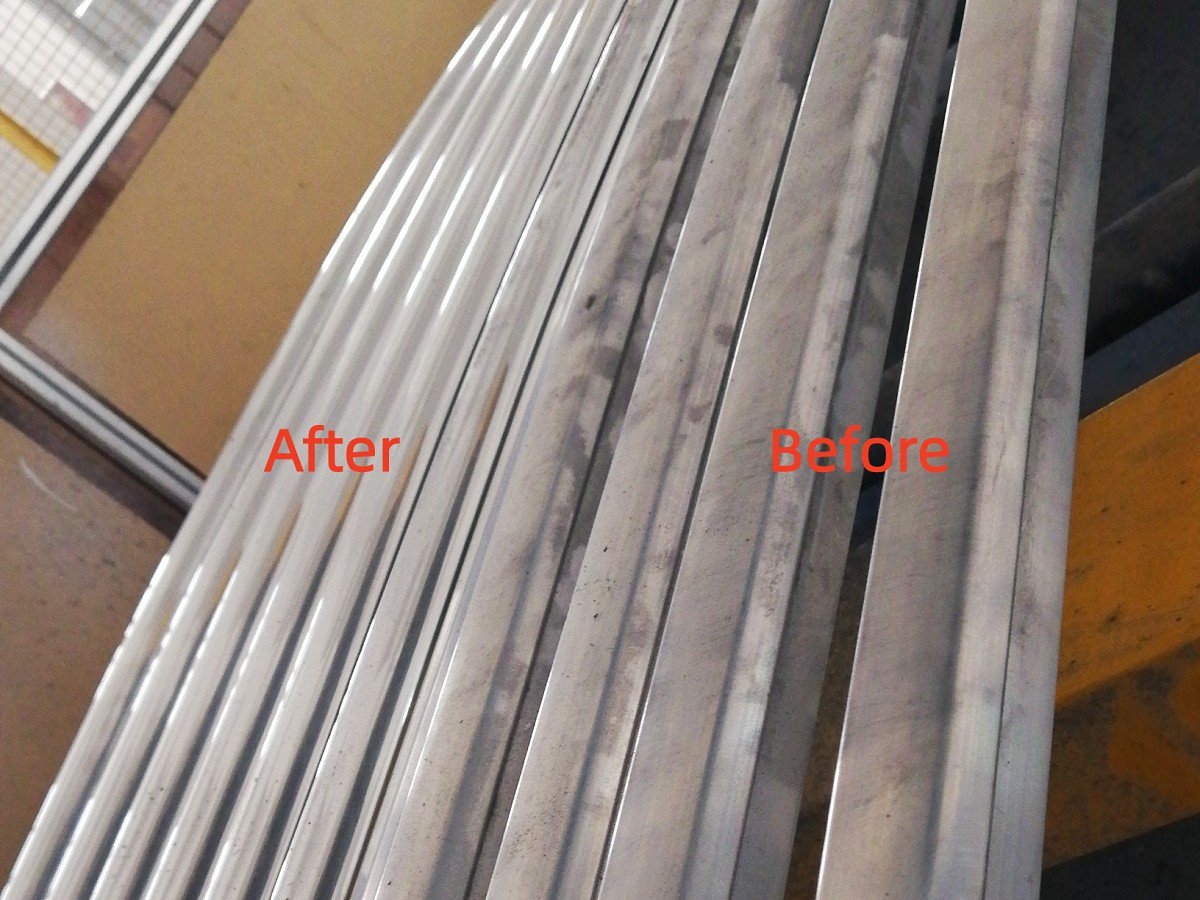
Before confirming the machine configuration, we recommend testing actual samples and defining the accepted finish through a reference sample, surface roughness, gloss level, and visible-defect criteria.
See more of our automotive surface-finishing applications or review a related car door frame sanding and buffing solution.
Information Required for a Custom Proposal
Please provide the following information whenever possible:
- Roof rail material and manufacturing process
- 2D or 3D drawing with overall dimensions
- Photos of the incoming surface and visible defects
- Required finish and an approved reference sample
- Surfaces that must be processed or protected
- Product models and expected changeover requirements
- Required output per hour or target cycle time
- Available floor space and line-integration requirements
You can also read how to estimate robotic polishing cycle time before defining the production target.
Frequently Asked Questions
Can one robotic system process different roof rail models?
Yes. Different models can be handled through interchangeable fixtures and separate process recipes. The number of models, size differences, and required changeover time must be evaluated during system design.
Can buffing remove deep scratches or extrusion marks?
Buffing is primarily a final finishing stage and cannot reliably remove deep defects. Parts with pronounced marks normally require sanding, fine grinding, or polishing before final buffing.
Can the system produce a mirror finish?
A mirror-like finish may be achievable when the material and incoming surface are suitable. The required abrasive sequence, polishing wheels, compound, and cycle time should be confirmed through sample testing.
Should the robot hold the roof rail or the finishing tool?
Both arrangements are possible. The correct method depends on part size, rigidity, surface access, fixture design, production target, and the number of required finishing stages.
How is buffing dust controlled?
The workstation can be equipped with a protective enclosure and connected to a suitable dust-extraction system. The final design must consider the selected consumables, generated dust, and applicable factory safety requirements.
What determines the production cycle time?
Cycle time is affected by part length, processed surface area, initial surface condition, number of stages, target finish, loading method, and inspection requirements. Actual samples are needed for a reliable estimate.
Request a Roof Rail Buffing Solution
Send us your roof rail drawings, part photos, incoming surface condition, required finish, and production target. Kingstone will evaluate the process route, workstation configuration, fixtures, and suitable consumables for your application.