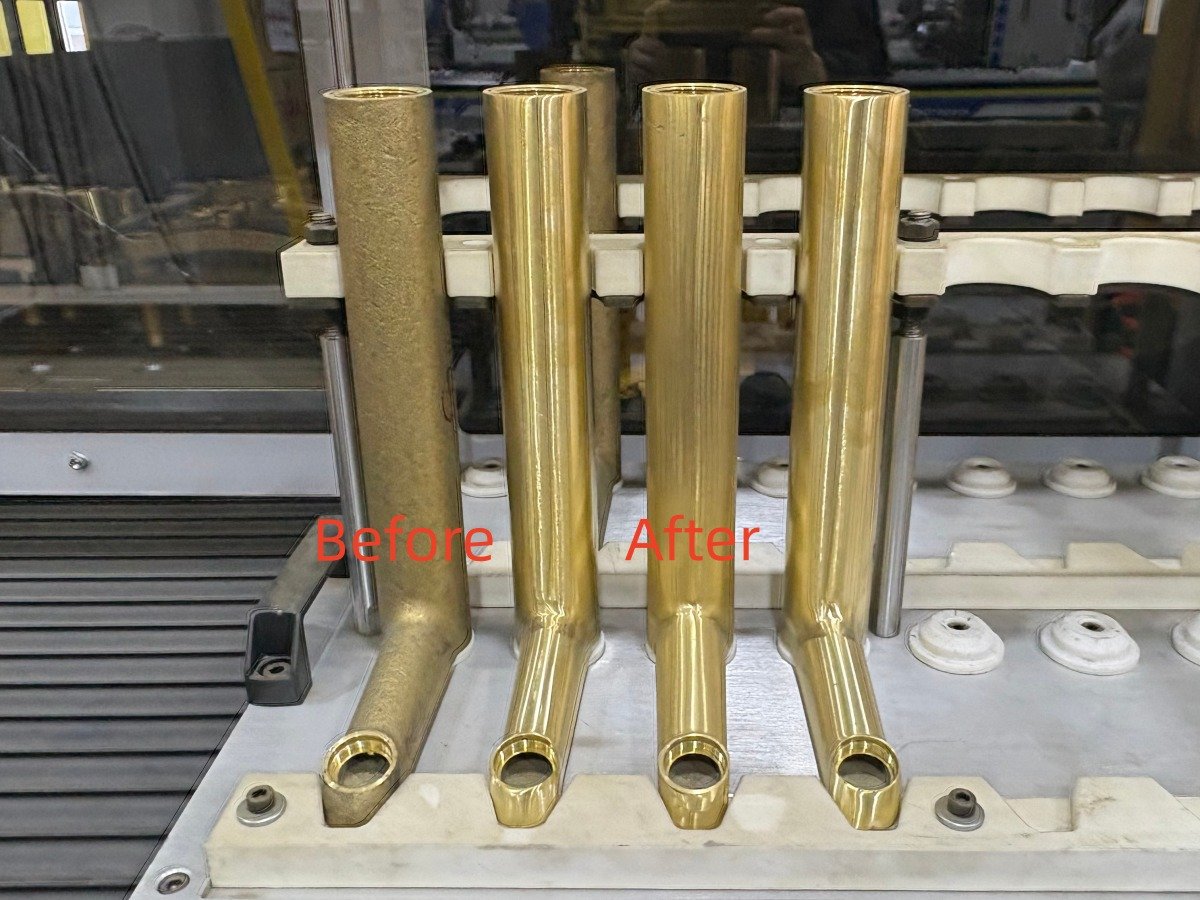
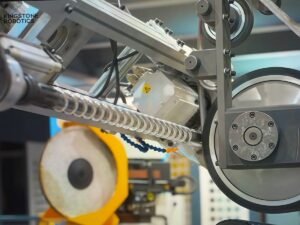
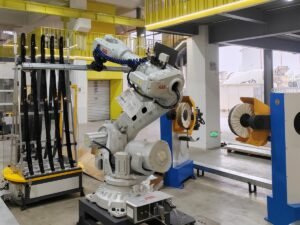
Kingstone Robotics designs robotic buffing cells for metal components that require a consistent decorative finish. We select the workpiece handling method, fixtures, buffing wheels and compounds according to the part geometry, incoming surface and target appearance. The process and cell layout are defined after reviewing representative parts and the required production output.

Each cell is configured around the workpiece, the required finish and the production target. The items below are selected according to the application rather than supplied as one fixed machine specification.
The robot can hold the part or carry the finishing tool, depending on part size and surface access.
Wheel and compound options are selected for the material and target appearance.
Robot paths, contact angles and pressure settings are tuned during sample trials.
Fixtures and programmed motion help the wheel reach the required faces and transitions.
Separate preparation, polishing and final buffing stations can be arranged when needed.
Dedicated fixtures and saved programs can support approved part variants.
Finished samples are reviewed against an agreed appearance or finish requirement.
Protective guarding and suitable extraction can be included in the cell design.
Need to remove deeper surface marks? Explore our Robotic Grinding and Polishing Machines.
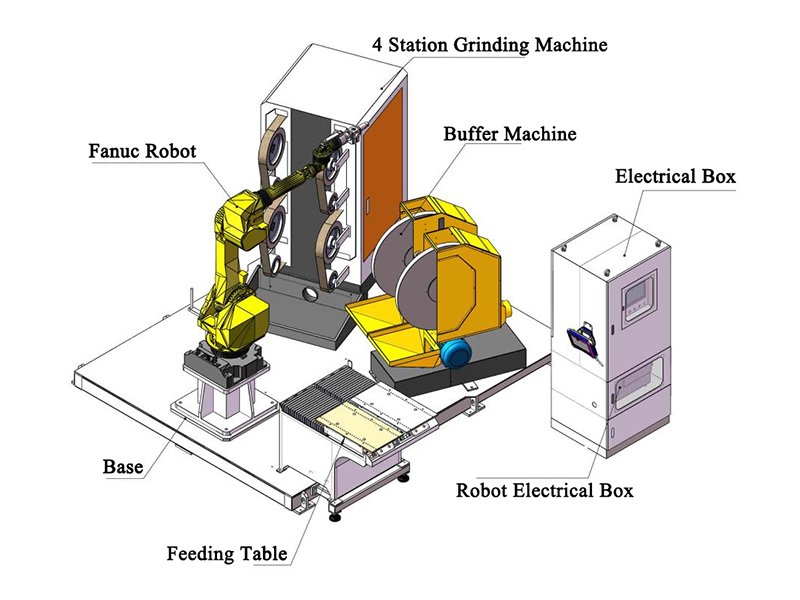
Concept layout showing separate surface-preparation and final buffing stations. The actual layout depends on the workpiece and finish target.
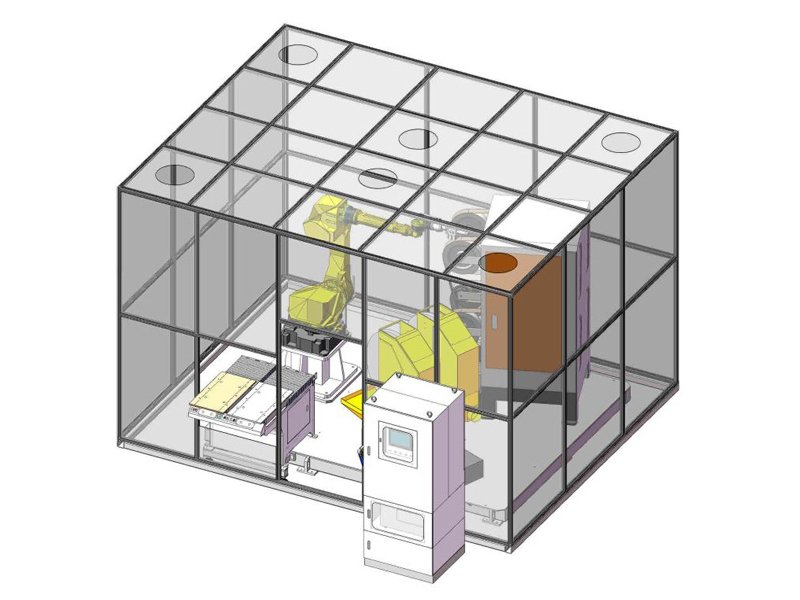
Illustrative layout of a robotic finishing workstation with protective guarding.
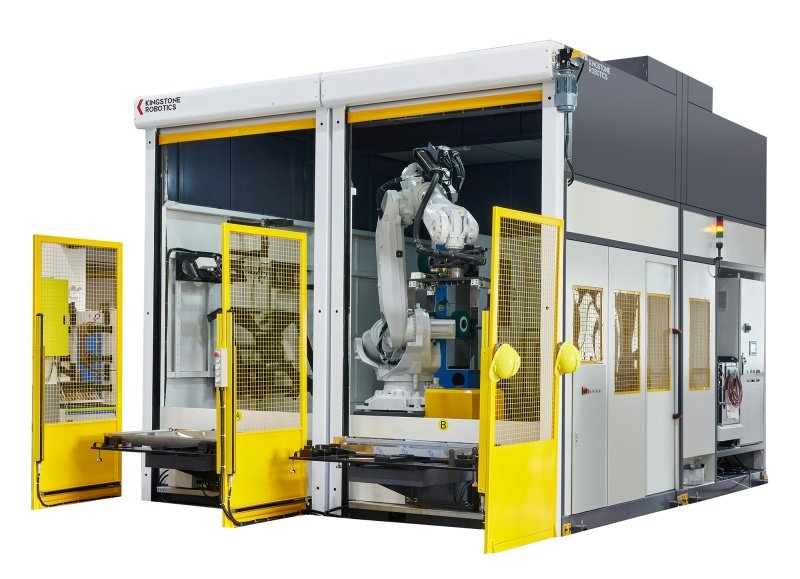
An example of an enclosed robotic cell. Tooling, fixtures and station layout are selected for each project.
Explore how robotic finishing can be configured for extruder screws, automotive door frames and roof rails. Each application requires its own handling method, surface-preparation steps and finish criteria.
Robotic buffing is suited to parts that need a repeatable bright or decorative finish after the required surface preparation. The robot may present a part to a fixed wheel or move a finishing tool around a fixture-held part. We confirm the process on your samples.
We review representative parts and incoming finishes before selecting the process sequence.
Robot motion and fixture orientation are tested to reach the required surfaces and edges.
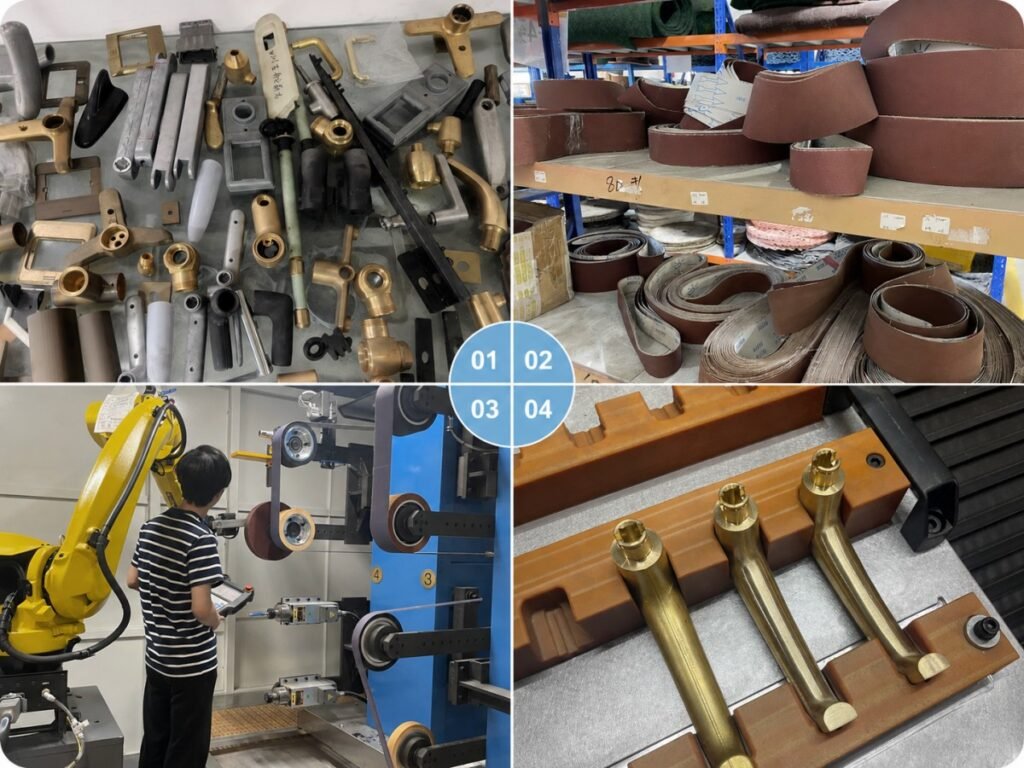
Wheel and compound choices are based on the material, geometry and target appearance.
Sample results are compared with an agreed reference before the cell design is finalized.
Send us part photos or drawings, material, dimensions, incoming surface condition, target finish and required output.
We evaluate representative parts and select suitable wheels, compounds and contact conditions for the required finish.
Trial results guide the robot handling method, fixtures, finishing stations, guarding and operating sequence.
The cell is assembled and tested with representative parts before delivery, according to the agreed project scope.
We commission the cell and train operators on setup, part changeovers and routine operation.
Our team assists with operating questions, consumables, maintenance and service requests according to the support plan.
Share photos or drawings of your part, its material and dimensions, the incoming surface condition, the areas to be buffed, your target finish and required output. A reference sample helps us evaluate the process and propose a suitable cell layout.