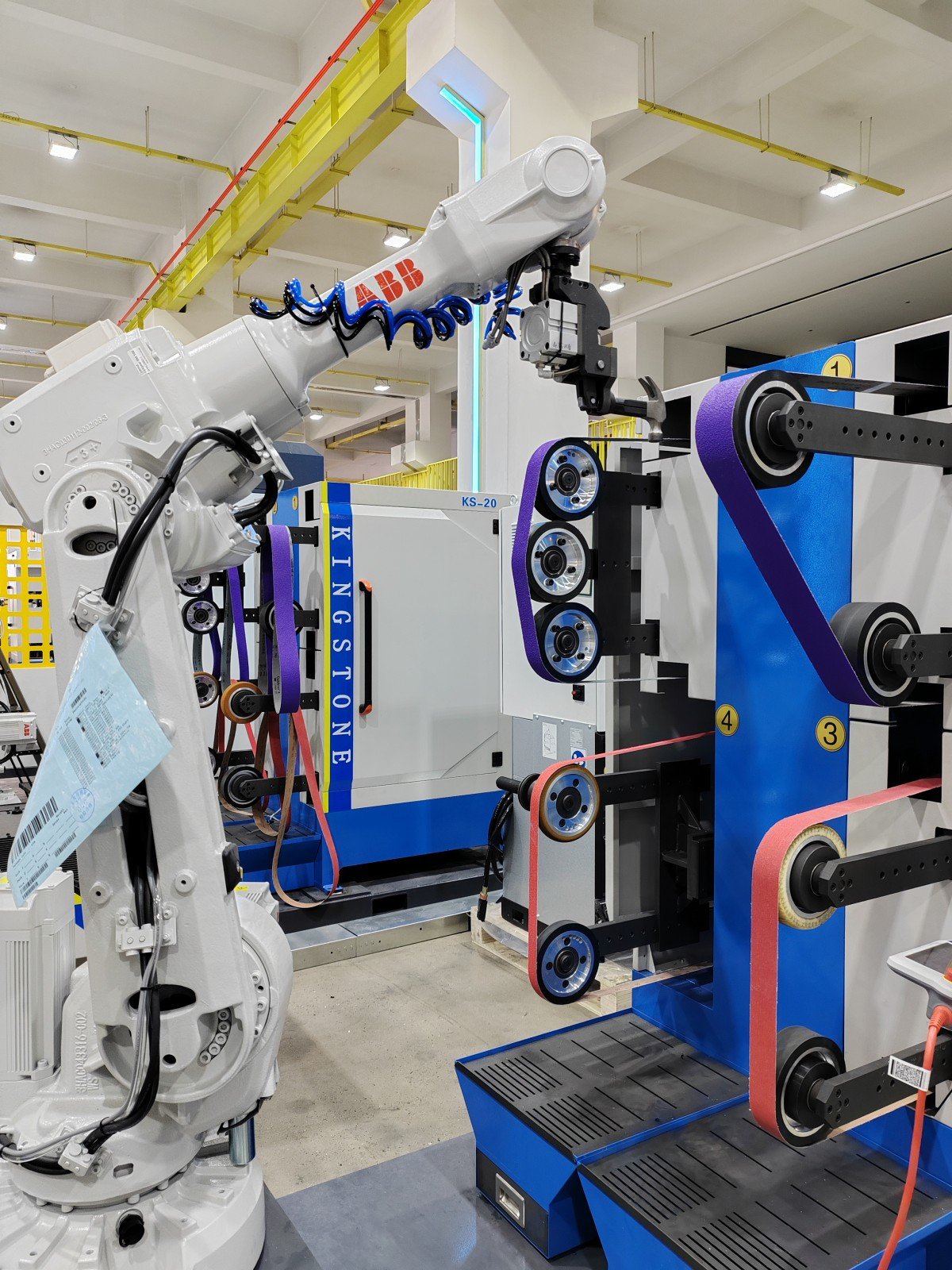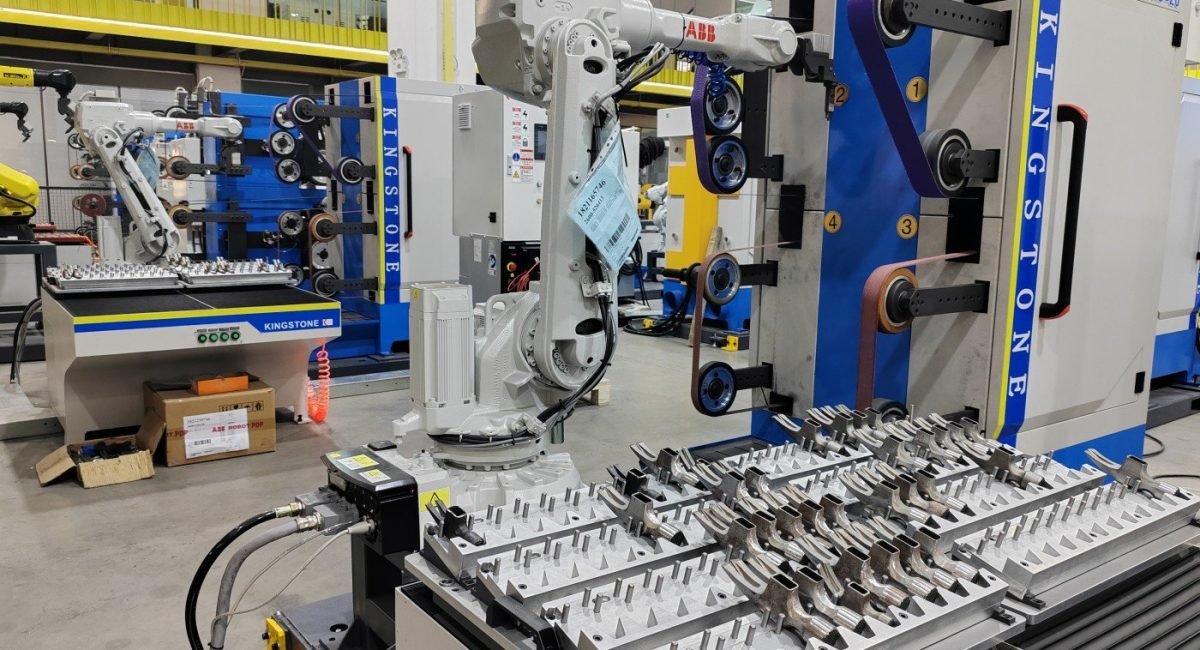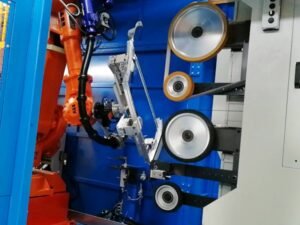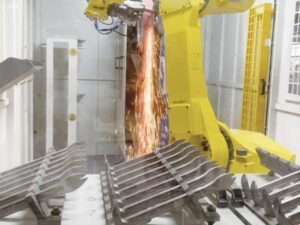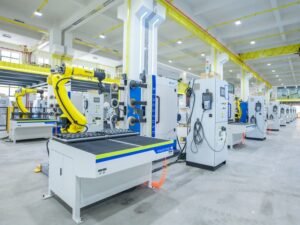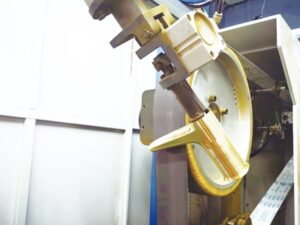
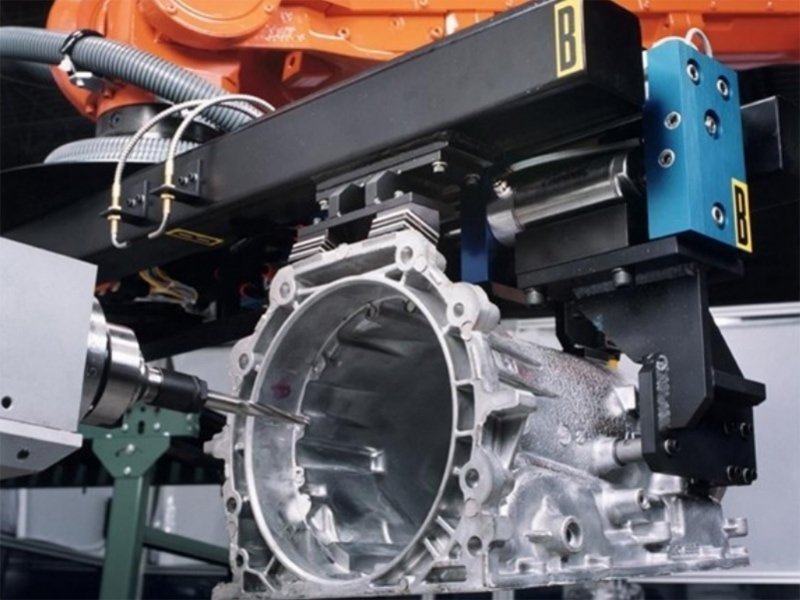
Kingstone designs and integrates robotic belt grinding cells for removing casting flash, raised parting lines and burrs left after machining. Each workstation is configured around the actual workpiece, material, target finish, cycle time and loading method.
Typical configurations combine a six-axis robot with single-, double- or four-station belt sanders, floating force control, abrasive-wear compensation, safety guarding and dust control.
Our robotic grinding workstations are designed for parts requiring repeatable material removal before assembly, coating or further polishing.

Follow irregular profiles and remove casting or machining burrs from housings and engine components.
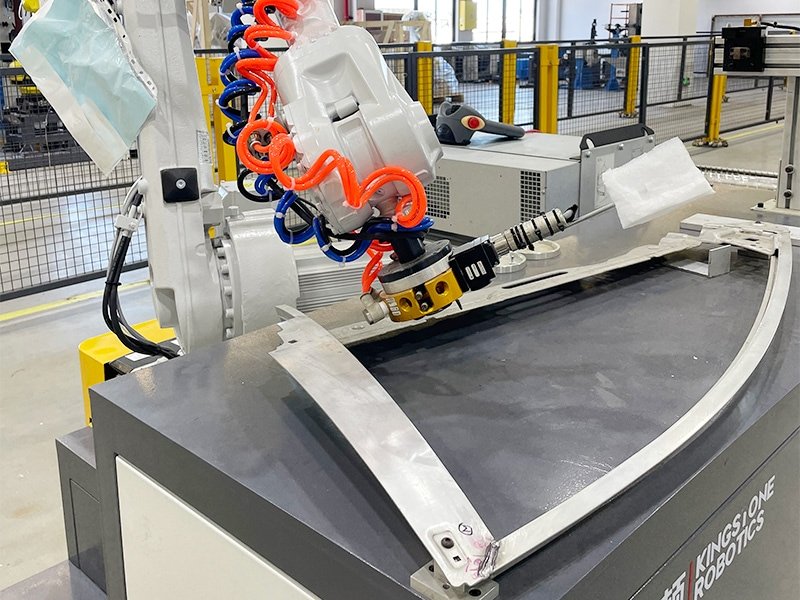
Maintain consistent contact along large, long or curved automotive components.
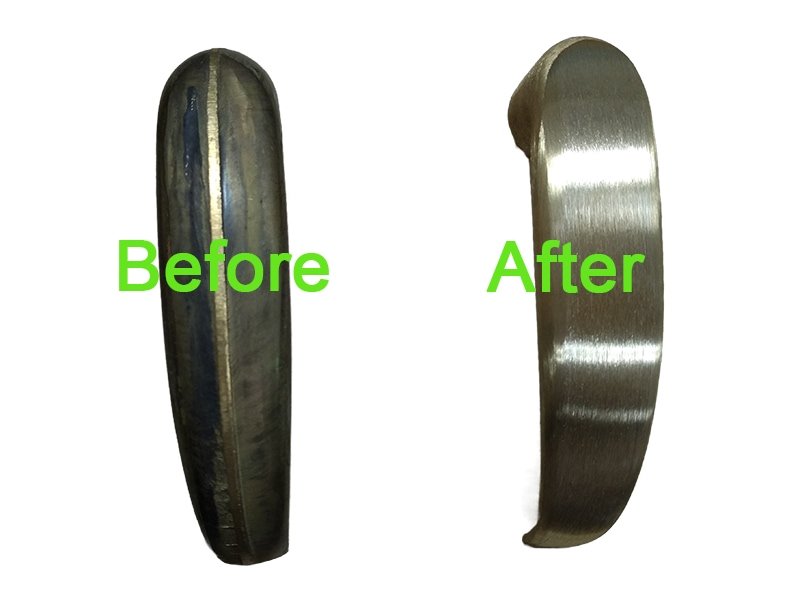
Achieve consistent surface preparation for brass faucets and door handles before polishing or coating.
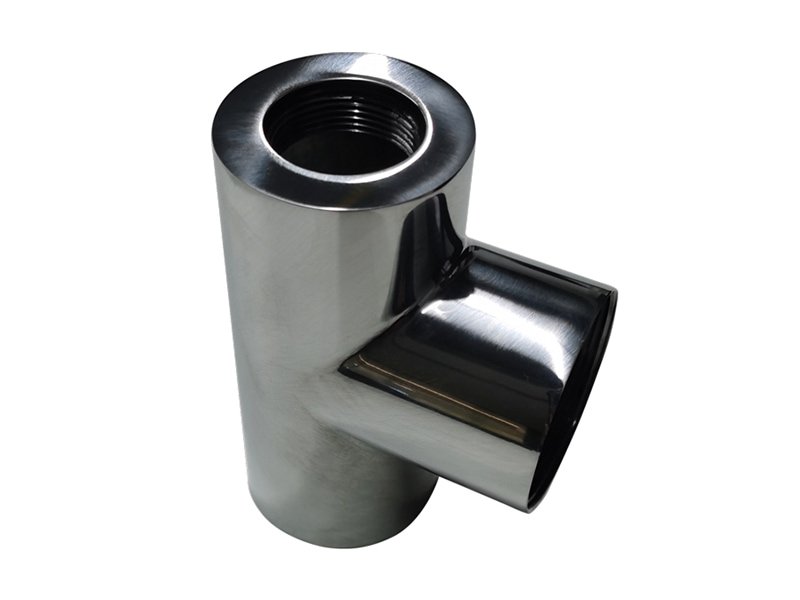
Prepare hardware tools, valves and sanitary fittings for the next finishing or coating process.

Functions are selected according to each project. Not every workstation requires every module.
Supports single-, double- or four-station belt sanding configurations based on the required grinding sequence.
Optional tool libraries and automatic change systems support multiple grinding steps with less manual intervention.
Optional inspection identifies workpiece position and dimensional deviation before or during processing.
Adjusts for abrasive wear to reduce finish variation over the service life of the belt or wheel.
Helps reproduce proven grinding paths and shorten changeover for new part models.
Maintains controlled contact force and compensates for acceptable variation in incoming parts.
Removes grinding debris from the processing area to support stable and cleaner operation.
Integrates dust control, sound insulation and safety guarding for the production cell.

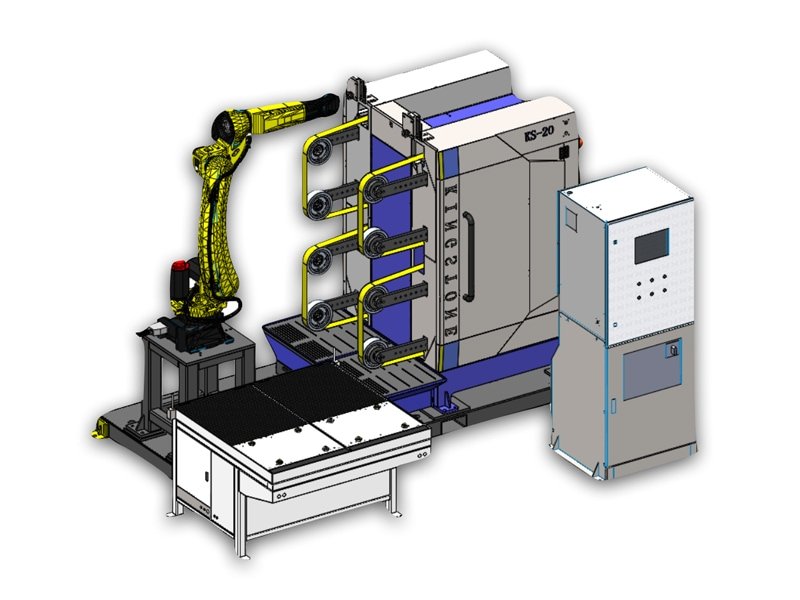
20–60 kg six-axis robot with a four-belt sanding unit. Suitable for multi-step grinding with several abrasive grades available within one compact cell.
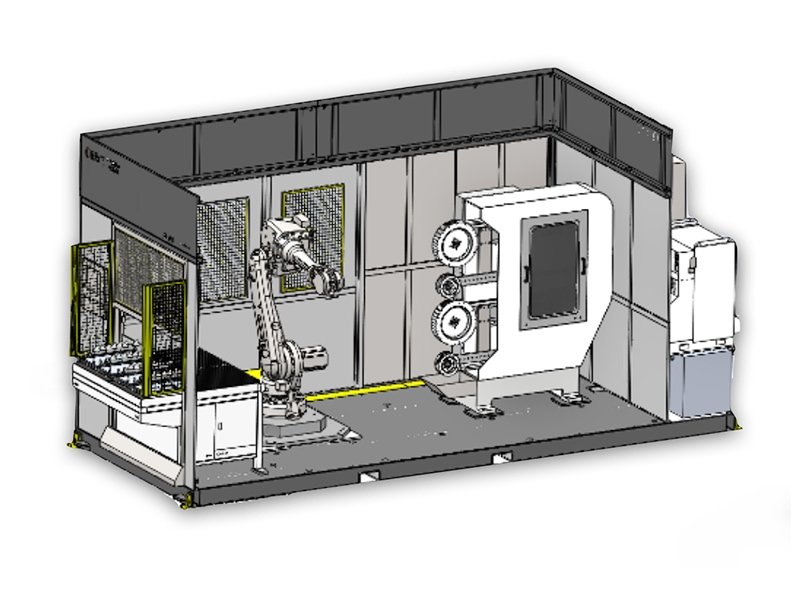
20–60 kg robot with a double-belt sander and enclosed safety cell. Designed for stable batch grinding with improved dust, chip and noise control.
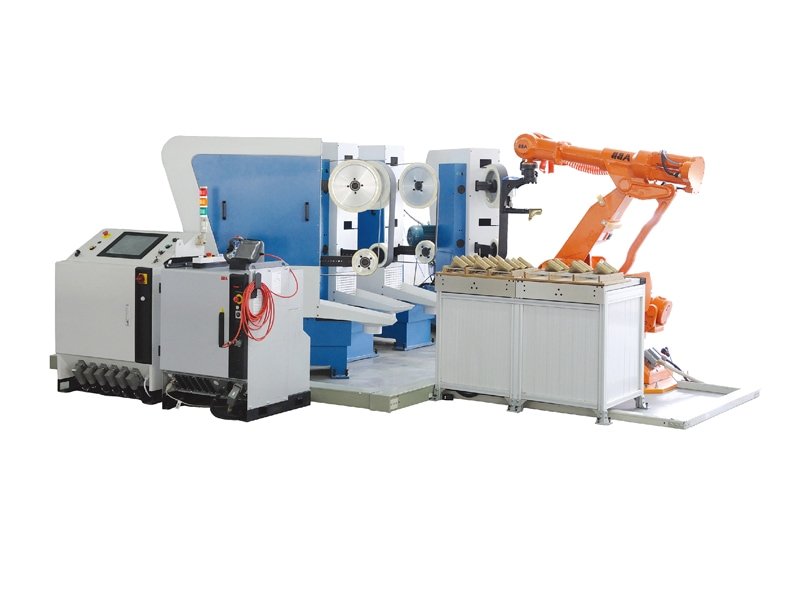
Integrates grinding with optional size and displacement detection, tool or consumable change, tool library, chip removal and automated loading or unloading.
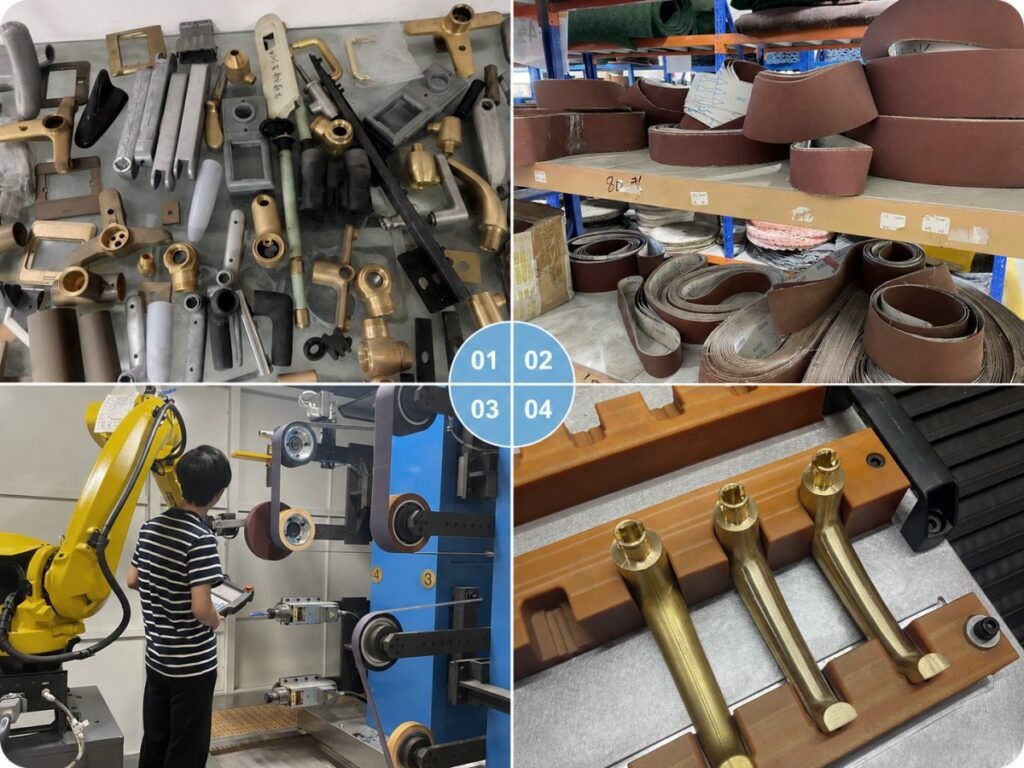
Kingstone develops robotic grinding solutions for castings, machined parts, automotive components, hardware and sanitary fittings. Send us your part photos or drawings, material, dimensions, weight, areas to be ground, target finish, cycle time and production volume. Our team will evaluate the process and recommend a suitable robotic grinding workstation.
Floating force control and optional visual inspection help compensate for acceptable upstream variation and stabilize the grinding process.
Offline programming and stored process programs help transfer proven paths to new part variants more efficiently.

Our process library supports the selection of abrasive belts, contact wheels and customized grinding consumables for the required geometry and finish.
For high-precision applications, inspection and closed-loop control can be integrated with the grinding process to improve consistency.
Send part photos or drawings, material, dimensions, weight, burr or flash locations, current process, target finish, cycle time and production volume.
We test actual workpieces to confirm abrasive selection, contact method, force, speed, path and achievable result.
We configure the robot, belt sanding stations, fixtures, safety enclosure, dust management and required automation modules.
The system is assembled, programmed and tested with production-representative parts before shipment.
We support installation, commissioning and operator training at the customer’s facility.
Remote assistance, spare parts and maintenance support help keep the workstation operating reliably.
Consistent Material Removal: Repeatable paths and controlled force reduce operator-to-operator variation.
Predictable Production: Automated grinding stabilizes cycle time and supports continuous batch operation.
Safer Working Conditions: Enclosed dust, chip and noise control reduces direct operator exposure to the grinding process.
Flexible for Part Families: Changeable fixtures, stored programs and configurable sanding stations support multiple product models.

Send us your part photos or drawings, material, dimensions, weight, current grinding process, target result, cycle time and annual production volume. We will evaluate the application, recommend sample testing and propose a suitable robotic grinding workstation.