
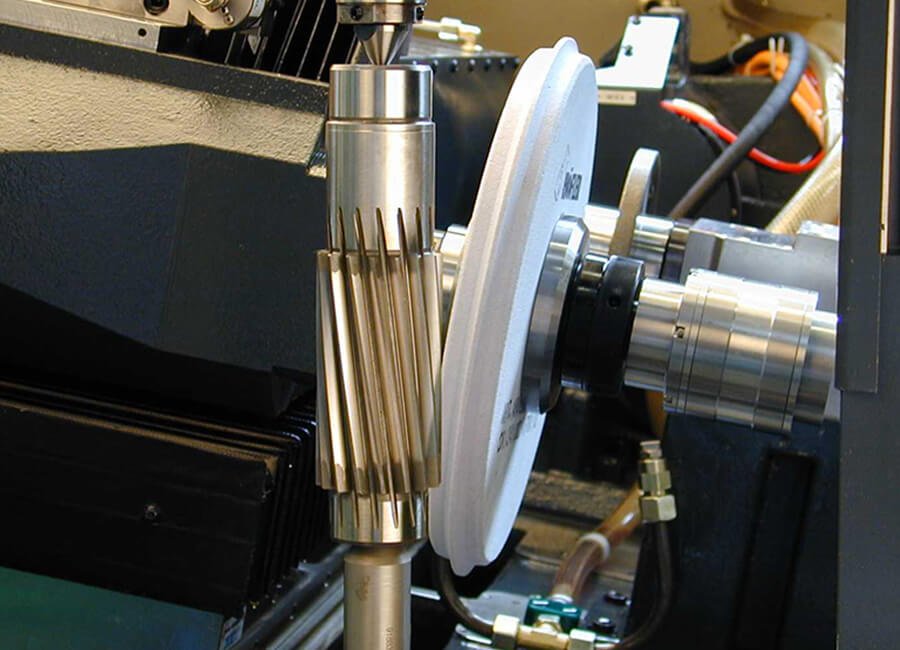
As product designs become more complex and production cycles grow shorter, flexible automation grinding has emerged as a vital solution in today’s manufacturing landscape. Unlike traditional grinding systems designed for high-volume, single-task operations, flexible robotic grinding offers adaptability across various part geometries, materials, and finishing requirements—making it ideal for manufacturers facing high-mix, low-volume production challenges.
This article explores the core elements of flexible robotic grinding, including:
- Key Advantages
- Rapid changeovers between product types
- Improved consistency and precision across varying part shapes
- Reduced labor dependency and safer working conditions
- Scalable automation for both small batch and continuous production
- Technological Considerations
- Use of force-controlled end effectors to maintain surface quality
- Integration with vision systems for part identification and alignment
- Programmable tool changers for handling multiple grinding or polishing tasks
- Compatibility with CAD/CAM workflows and digital twin systems
- Real-World Applications
Flexible robotic grinding is used in sectors such as automotive, aerospace, medical devices, and metal fabrication—processing components like engine casings, cast housings, surgical instruments, and custom hardware with speed and precision.
KS Robotics stands at the forefront of this transformation, offering tailored grinding systems that balance flexibility with performance. By designing robotic cells that adapt to evolving production needs, KS helps manufacturers boost productivity, ensure repeatable quality, and reduce downtime—while future-proofing their operations in an increasingly dynamic market.
What is Flexible Automation Grinding?
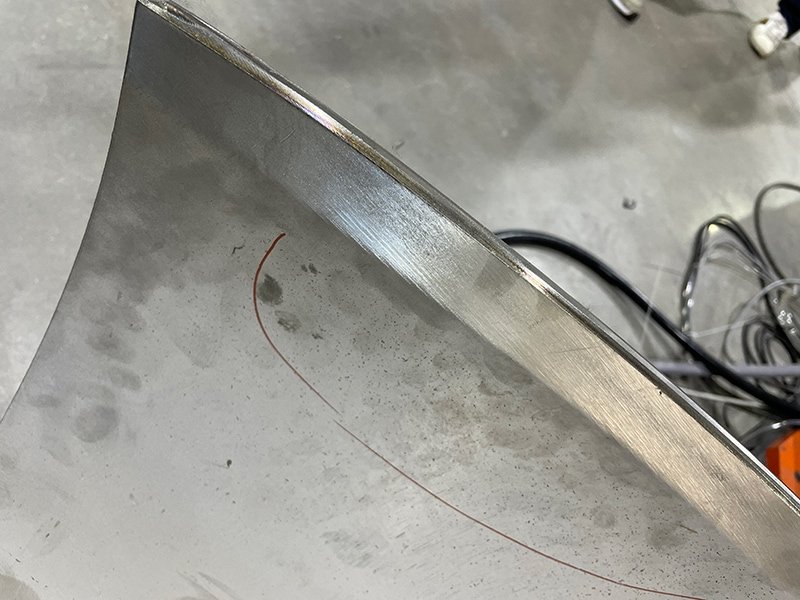
Flexible automation grinding involves robotic systems capable of adapting to different workpiece shapes, sizes, and complexities. Unlike traditional fixed automation designed for repetitive high-volume tasks, flexible automation excels in dynamic production environments that require frequent adjustments. These robotic systems enable manufacturers to efficiently handle variable production demands with enhanced precision and repeatability.
Applications and Advantages
Flexible automation grinding is particularly beneficial in scenarios such as:
- Complex Geometrical Shaping: Automated grinding can handle intricate and irregular surfaces that would be challenging for manual labor.
- Small-Batch, High-Mix Production: Ideal for industries where product customization is a priority, ensuring seamless transitions between different product designs.
- Processes Requiring Frequent Adjustments or Reprogramming: The adaptability of robotic systems allows for quick adjustments based on changing production requirements.
Key Technological Considerations for Flexible Automation Grinding
1. Robotic Path Planning
Robotic grinding relies heavily on precise path planning. Advanced software enables robots to follow highly accurate trajectories, ensuring consistent grinding quality and minimizing rework. According to the IEEE Robotics and Automation Society, well-defined robotic paths significantly reduce production downtime and improve precision.
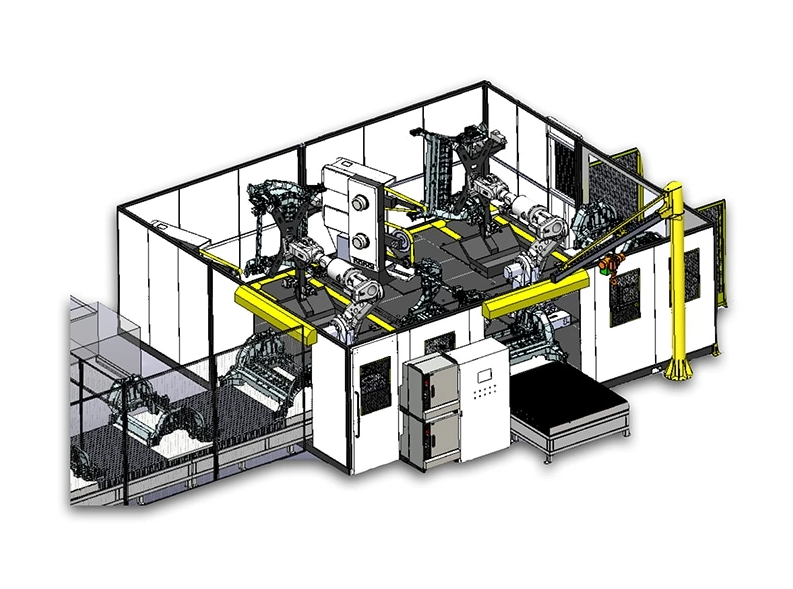
Integrated Fully Automatic Robotic Workstation
2. Force Control Technology
Accurate force control is essential for robotic grinding to maintain uniform pressure on surfaces, adapting to variations in material and shape. Two primary force control methods include:
- Passive Force Control: Utilizes spring or pneumatic cylinders to regulate force passively.
- Active Force Control: Incorporates sensors and feedback systems to adjust force dynamically.
Studies from Manufacturing Automation Magazine highlight that advanced force control significantly enhances the consistency and quality of robotic grinding operations.
3. Vision-Guided Grinding
Modern robotic grinding systems incorporate vision-guided technologies to enhance precision. High-resolution cameras and 3D scanning systems enable real-time adjustments based on workpiece geometry, further improving accuracy and reducing the need for manual oversight. Vision guidance ensures that robots can adapt to subtle variations in workpieces, making automation viable even in industries requiring high customization.
4. Abrasive Selection and Wear Compensation
The choice of abrasives in robotic grinding plays a critical role in ensuring durability and efficiency. Specialized abrasives, such as those offered by 3M, enhance grinding performance and longevity. Furthermore, robotic systems equipped with wear compensation technology can detect abrasive degradation and automatically adjust grinding parameters, ensuring consistent quality throughout the process.
Application Areas of Flexible Automation Grinding
Flexible automation grinding has found widespread adoption in industries that demand precision and efficiency:
- Complex Weld Grinding: Ensures uniform finishes for welded joints.
- Precision Deburring: Removes burrs and sharp edges to enhance product safety and functionality.
- Surface Finishing, Brushing, and Polishing: Achieves high-quality finishes on metals and non-metals.
- Rust or Coating Removal: Efficiently eliminates unwanted surface coatings and corrosion.
The International Federation of Robotics (IFR) reports increasing adoption of flexible robotic automation systems in industries such as automotive, aerospace, and medical equipment manufacturing.
Key Advantages of Flexible Automation Grinding
- Adaptability: Can handle both small and large batches with varied geometries, making it ideal for dynamic manufacturing environments.
- Consistent Quality: Robotic precision ensures uniform finishes, meeting strict industry tolerances.
- Reduced Labor Costs: Automating grinding tasks frees skilled workers for more complex and value-added processes, lowering overall operational expenses.
- Improved Worker Safety: Reduces exposure to hazardous conditions such as airborne particulates and sharp materials.
- Enhanced Productivity: Continuous operation without fatigue or human error results in higher throughput and efficiency.
- Sustainability: Robotic grinding minimizes material wastage, ensuring an eco-friendly manufacturing process by optimizing the use of consumables and reducing environmental impact.
Integrating Flexible Automation into Your Manufacturing Process
Implementing robotic grinding requires close collaboration among various stakeholders, including manufacturers, robot suppliers, abrasive providers, and system integrators. Key considerations include:
1. End-Effectors and Abrasives
Choosing the right abrasive tools is critical to achieving optimal grinding performance. Industry leaders like 3M offer specialized abrasives designed explicitly for robotic applications, ensuring consistent material removal and surface finish.
2. Robotics and Control Systems
Robot manufacturers such as ABB, KUKA, and FANUC provide high-precision robotic arms with advanced programming capabilities. System integrators tailor these robots to specific industrial needs, ensuring seamless operation and maximum efficiency.
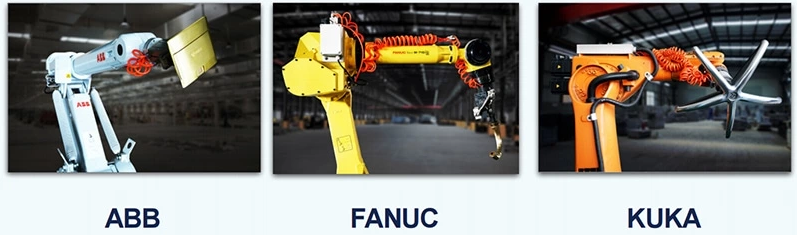
Six-Axis Robotic Arm
3. Offline Programming and Simulation
Advanced offline programming tools enable manufacturers to program robotic grinding systems virtually before implementation, reducing downtime and enhancing accuracy. Simulations help refine path planning, optimize grinding angles, and test multiple scenarios before actual deployment.
4. Automated Quality Inspection
Integrating automated quality inspection systems with robotic grinding setups can enhance process reliability. Vision-based inspection ensures that all finished products meet required specifications, reducing the need for manual quality checks and minimizing defects.
KS Robotics Expertise in Flexible Automation Grinding
KS Robotics is a leader in robotic integration and grinding automation. By partnering with top abrasive manufacturers and leveraging cutting-edge robotic technology, KS Robotics delivers customized solutions that optimize manufacturing efficiency.
Unique Advantages of KS Robotics Solutions:
- Innovative Force Control: Ensures consistent pressure application across varied surfaces.
- Customizable Robotic Systems: Tailored to meet industry-specific grinding and polishing needs.
- Advanced Software Integration: Supports offline programming for quick deployment and minimal disruptions.
- Proven Industry Expertise: Successfully implemented in sectors such as automotive, aerospace, and medical device manufacturing.
- Scalability: KS Robotics solutions can be seamlessly expanded to accommodate growing production demands, making them a future-proof investment.
With years of experience in robotic automation, KS Robotics continues to drive innovation in flexible automation grinding, helping manufacturers achieve superior quality, safety, and cost efficiency in their production processes.
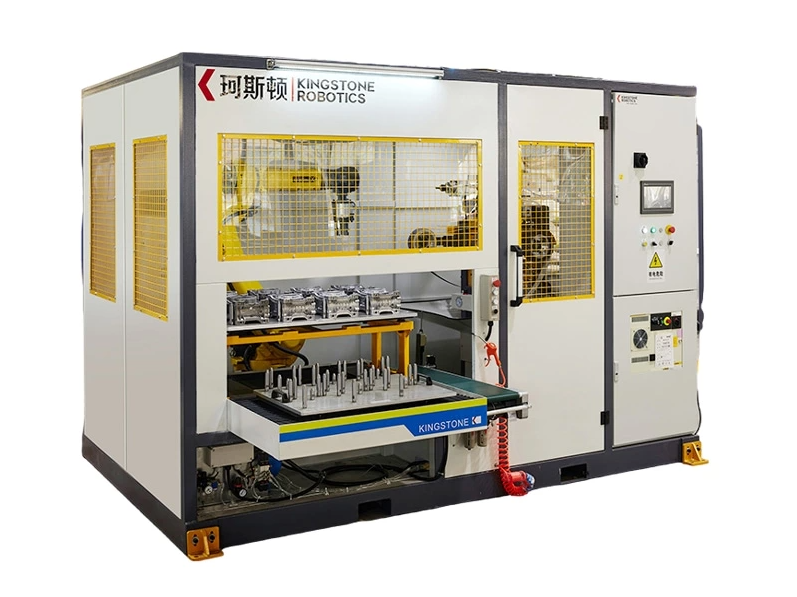
Integrated Enclosed Automatic Robotic Workstation
Conclusion
Flexible automation grinding is reshaping the manufacturing landscape by delivering higher precision, lower operational costs, and greater production efficiency. As industries move toward more complex, high-mix product demands, robotic grinding systems are becoming essential tools for maintaining quality and competitiveness in dynamic environments.
KS Robotics leads this transformation by providing customized, intelligent grinding solutions that adapt to changing production needs. With deep expertise in automation and surface finishing, KS empowers manufacturers to streamline workflows, reduce manual labor, and scale their operations with confidence.
Looking ahead, continued innovations—such as AI-enhanced force control, predictive maintenance, and seamless system integration—will further strengthen the capabilities of robotic grinding. Manufacturers that embrace these advancements will not only improve performance but also build more resilient, sustainable, and future-ready operations.