
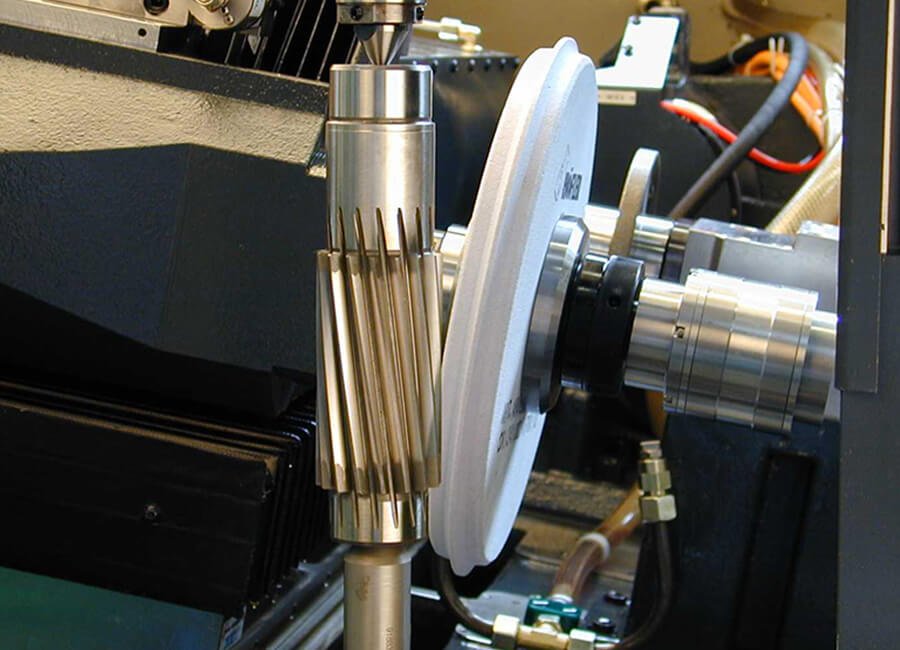
Precision Grinding: A Foundation of High-Quality Manufacturing
Precision grinding is a critical process in modern manufacturing, enabling the production of parts with tight dimensional tolerances and exceptional surface finishes. Its applications span numerous industries—from aerospace and automotive to medical devices and toolmaking—where even the slightest deviation in form or finish can compromise functionality and reliability.
At Kingstone Robotics, precision grinding is more than just a process—it’s a customized solution. By tailoring grinding and polishing systems to specific industry requirements, Kingstone helps manufacturers enhance efficiency, repeatability, and overall product quality across a wide range of applications.
Fundamentals of Precision Grinding
Precision grinding involves the controlled removal of material using a rotating abrasive wheel. Unlike conventional machining methods, this process removes material in extremely small increments, allowing for:
- High dimensional accuracy
- Smooth, uniform surface finishes
- Consistency in complex or hardened materials
- Minimal deformation or thermal damage
These characteristics make it ideal for finishing components such as engine parts, surgical tools, dies, molds, and bearings—where surface integrity and tolerance control are critical to performance.
Compared to other machining methods, precision grinding stands out for its ability to achieve micron-level tolerances, reduce post-processing needs, and meet the most stringent quality standards. With advancements in automation, force control, and real-time monitoring, robotic precision grinding is now more accessible and effective than ever—allowing manufacturers to scale operations while maintaining exacting standards.
By partnering with Kingstone Robotics, manufacturers gain access to industry-specific grinding solutions that not only meet current production challenges but also position them for long-term success in an increasingly quality-driven marketplace.
Major Types of Precision Grinding
1. Cylindrical Grinding
- Definition and Principles: Cylindrical grinding involves the rotation of the workpiece around its axis while in contact with a grinding wheel, allowing for material removal from the external surface.
- Process Workflow: The typical steps include clamping the workpiece, aligning it accurately, performing the grinding operation, and measuring the outcome to ensure compliance with specifications.
- Accuracy and Surface Quality: This process can achieve dimensional tolerances within ±0.0025 mm and surface roughness values ranging from Ra 0.1 to 0.4 µm.
- Technical Features and Advantages: Cylindrical grinding is renowned for its high precision and ability to produce smooth surface finishes, making it suitable for components requiring exact dimensions and surface integrity.
- Typical Applications: Commonly used for machining shafts, gear shafts, and precision grinding of bearing rings.
2. Centerless Grinding
- Definition and Process Principles: Centerless grinding eliminates the need for workpiece support centers. Instead, the workpiece is supported by a blade and regulated by a control wheel while being ground by the grinding wheel.
- Process Variations: Includes through-feed grinding, where the workpiece passes through the grinding area continuously, and in-feed grinding, suitable for complex shapes requiring precise grinding in specific areas.
- Advantages Over Traditional Grinding: Offers higher efficiency and is well-suited for mass production due to its continuous operation and reduced setup times.
- Technical Features: Capable of achieving diameter tolerances within ±0.002 mm and surface finishes with Ra values between 0.05 and 0.2 µm.
- Typical Applications: Ideal for mass production of needle rollers, hydraulic piston rods, and precision components in medical devices.
3. Internal Grinding
- Definition and Process Workflow: Internal grinding focuses on machining the internal surfaces of workpieces using a specialized grinding wheel.
- Process Implementation: Involves securing the workpiece, positioning the internal grinding wheel, and executing the grinding operation to achieve the desired internal dimensions.
- Technical Features: Capable of attaining internal diameter tolerances around ±0.002 mm, suitable for complex internal geometries.
- Typical Applications: Commonly applied in the precision machining of hydraulic cylinder bores, engine cylinder bores, and bearing ring internal diameters.
4. Surface Grinding
- Definition and Process Explanation: Surface grinding involves using a rotating abrasive wheel to produce a flat surface on a workpiece.
- Process Steps: Includes securing the workpiece on the grinding table, controlling the flatness, performing the grinding operation, and inspecting the surface finish.
- Technical Features and Advantages: Achieves surface finishes as fine as Ra 0.05 µm and maintains flatness within ±0.005 mm.
- Typical Applications: Utilized in machining mold components, precision guideways, and flat surfaces of semiconductor parts.
5. Jig Grinding
- Definition and Principles: Jig grinding is employed for machining complex geometries and high-precision holes using a specialized grinding machine equipped with a high-speed spindle.
- Technical Features: Offers micron-level precision, with tolerances within ±0.001 mm, and is capable of producing intricate shapes and precise hole locations.
- Typical Applications: Applied in the manufacturing of precision mold components, aerospace parts, and micro-mechanical components.
6. Creep Feed Grinding
- Definition and Process Description: Creep feed grinding involves deep cuts with slow feed rates, allowing for significant material removal in a single pass.
- Technical Advantages: Provides high material removal rates while maintaining precision, reducing workpiece deformation and minimizing the heat-affected zone.
- Typical Applications: Used in machining gas turbine blade roots, complex slot shapes, and efficient processing of aerospace engine components.
7. Single and Double-Disc Grinding
- Definition and Basic Principles: Involves grinding one or both sides of a workpiece using abrasive discs.
- Technical Advantages: Highly efficient for mass production, ensuring precise control of workpiece thickness and parallelism within ±0.002 mm.
- Typical Applications: Employed in the batch processing of automotive parts like brake discs and shims, hydraulic valve plates, and precision instrument components.
8. External Grinding (Expanded Explanation)
External grinding is used to finish the outer surfaces of cylindrical components with high precision.
- Universal Cylindrical Grinding: Handles both external and some internal surfaces; suitable for complex shapes like tapers and contours.
- Precision Cylindrical Grinding: Delivers extremely tight tolerances and fine finishes, ideal for applications demanding high dimensional accuracy.
- Heavy-Duty Cylindrical Grinding: Designed for large, heavy components such as rollers and shafts, ensuring consistent performance under industrial load conditions.
9. Superabrasive Grinding
- Definition and Basic Principles: Utilizes ultra-hard abrasives such as diamond or cubic boron nitride (CBN) to grind exceptionally hard materials with high precision.
- Technical Advantages: Offers extended wheel life and maintains sharpness over longer periods, reducing tool changes. Enables micro-level accuracy and superior surface finishes, even on heat-treated or ultra-hard workpieces.
- Typical Applications: Applied in the precision grinding of carbide mold parts, sharpening of high-speed steel and tool steel cutting tools, and the fine machining of electronic components requiring tight dimensional tolerances.
Industry Applications of Precision Grinding
1. Commercial Vehicle Components
Transmission Systems and Chassis Key Components
Precision grinding is crucial in manufacturing commercial vehicle parts like transmission shafts, gears, axles, and steering joints, which must withstand heavy loads and prolonged use. Accurate grinding ensures proper fit, reduces vibration, and extends service life.
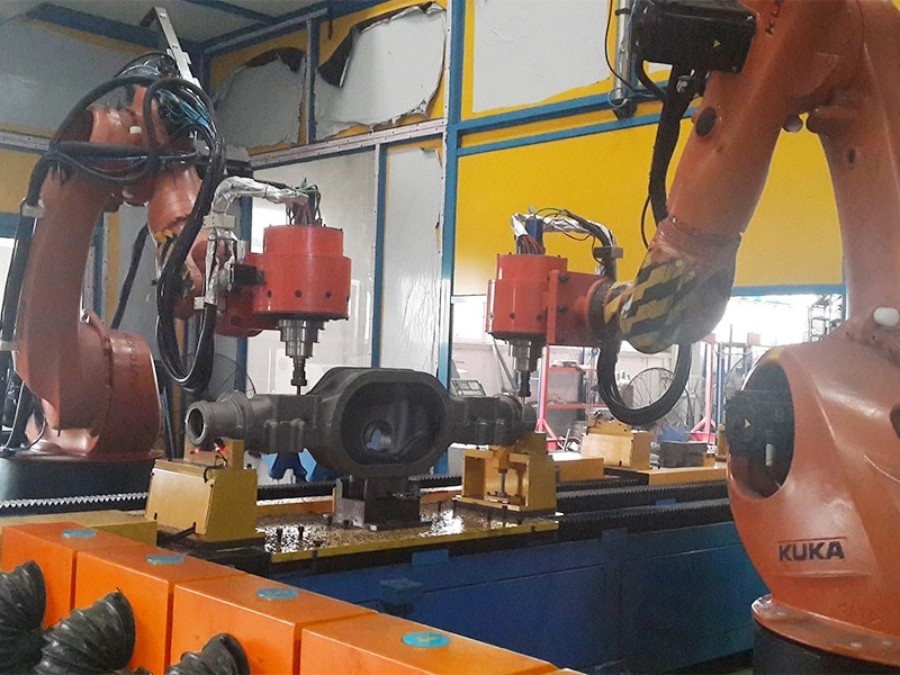
Commercial Automotive Drive Axel Grinding And Deburring
Kingstone Robotics provides automated grinding solutions tailored for large, complex components. Our systems use adaptive force control and programmable paths to maintain consistency across batches. This automation improves efficiency, reduces manual labor, and ensures reliable quality in high-volume production.
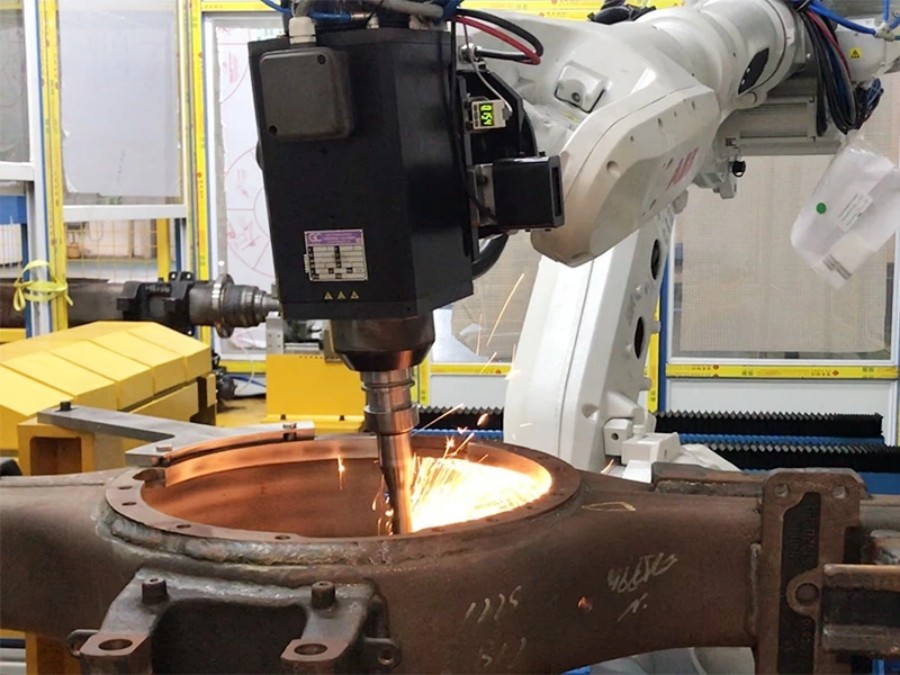
Drive Axel Grinding
2. Passenger Vehicle Components
Engines, Motors, Reducers, and Battery Systems
Precision grinding is essential for manufacturing key passenger vehicle components like engine blocks, crankshafts, reducer gears, and battery connectors. These parts require micron-level accuracy to reduce friction, enhance efficiency, and ensure reliable operation.
Crankshafts must be ground to precise roundness for proper lubrication, while battery connectors need smooth, conductive surfaces.
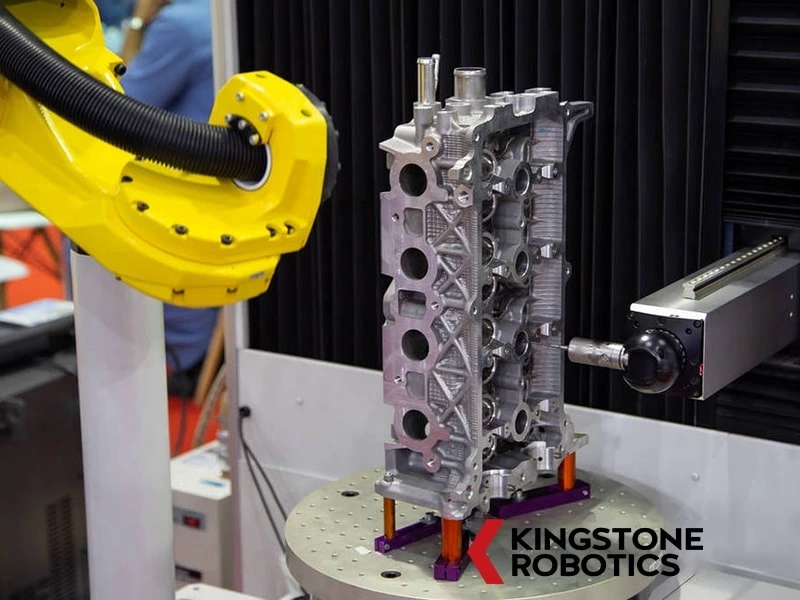
Automotive Engine Case Part Granding
Kingstone Robotics provides automated polishing systems that handle diverse materials with consistent precision. Our robotic solutions integrate pressure control and real-time monitoring to enhance surface quality, reduce errors, and support high-volume automotive production.
3. Aerospace Engine Components
Aircraft Skins, Compressor Blades, Fan Blades, and Turbine Blades
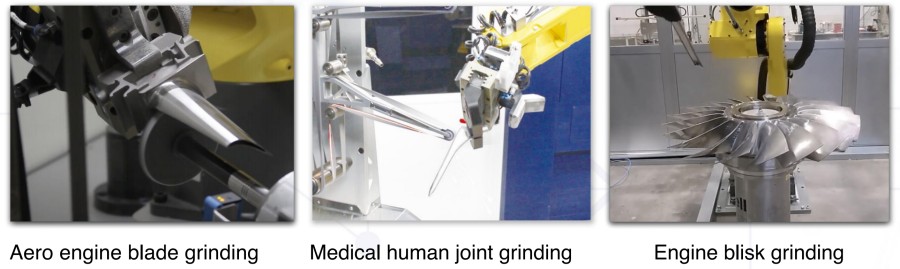
Aerospace components such as turbine and compressor blades require ultra-precise grinding to meet aerodynamic and thermal demands. These parts have complex 3D shapes and must maintain tolerances within microns to ensure performance and safety.
Aircraft skins and blade surfaces must be ground uniformly to minimize drag, resist fatigue, and prevent material stress.
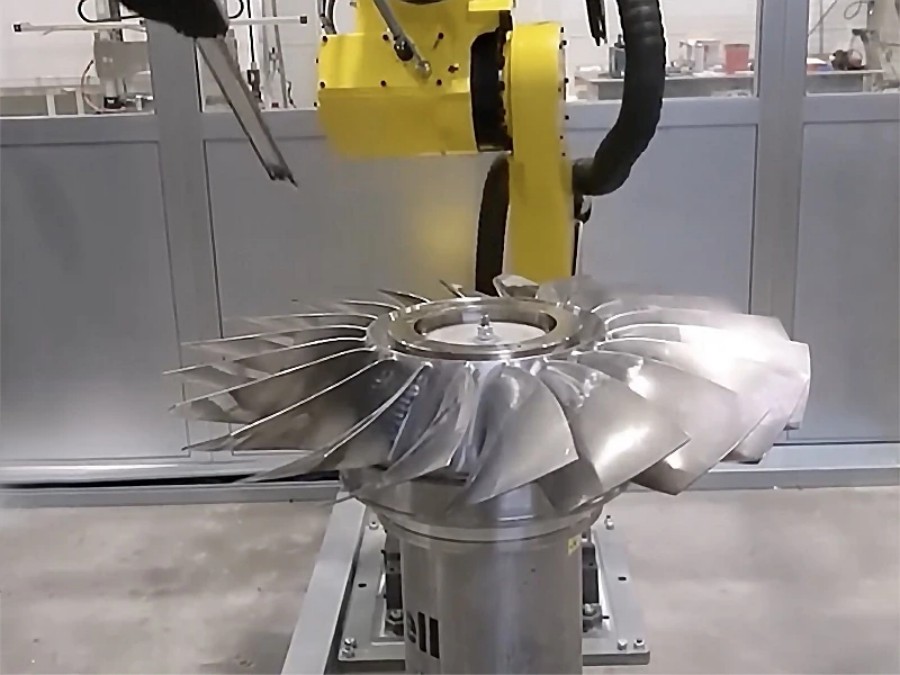
Aerospace Compressor Grinding
Kingstone Robotics delivers robotic grinding systems with multi-axis arms and real-time force control, ideal for curved aerospace surfaces. Our solutions ensure consistent finishing and meet strict aviation traceability and quality standards.
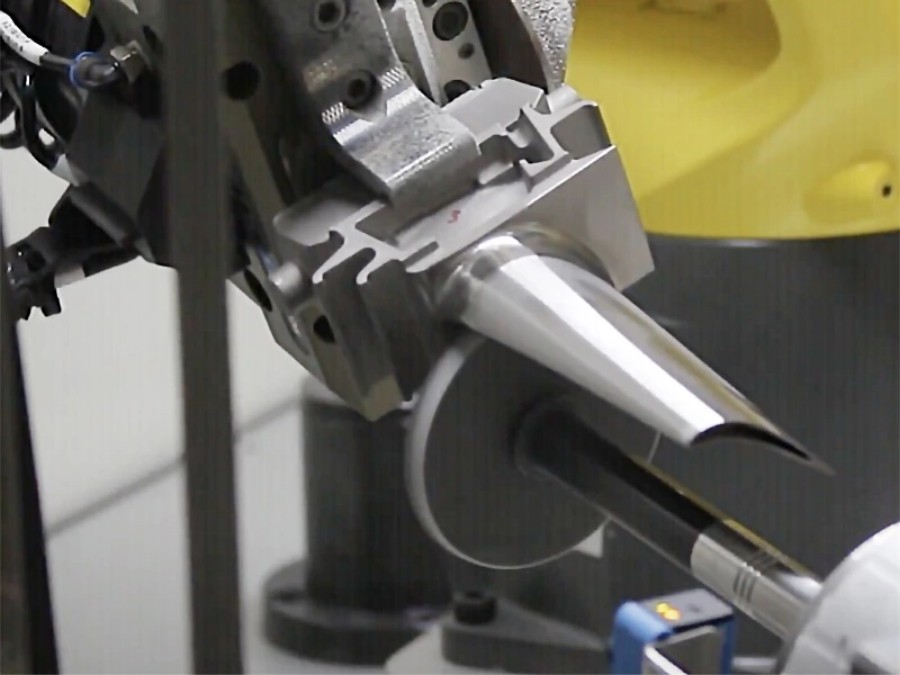
Aerospace Aircraft Turbine Blade Grinding
4. Rail Transit
Bogies, Switches, Tracks, and Wheels
Precision grinding is vital in both manufacturing and maintaining rail transit components. Parts such as bogies, rails, wheels, and switches must meet strict profile and flatness requirements to ensure safe and smooth train operation.
Grinding restores worn surfaces, prevents vibration, and helps maintain optimal wheel-rail contact. Switch grinding also reduces the risk of derailment.
Kingstone Robotics provides automated grinding systems for large rail components. Our solutions include programmable motion, adaptive force control, and support for heavy parts—ideal for production and maintenance use.
Kingstone Robotics’ Advantages in Customized Grinding and Polishing
1. Technical Collaboration and Research & Development
Kingstone Robotics maintains strong technical partnerships with globally recognized robotic system providers, including FANUC, KUKA, and ABB. These collaborations enable the integration of reliable, high-performance robotic platforms into their grinding and polishing solutions. Through this ecosystem of advanced automation technology, Kingstone ensures its systems meet the rigorous standards of modern industrial applications.
In parallel, Kingstone Robotics commits significant resources to research and development. Our R&D teams continually innovate in areas such as force-sensing feedback, adaptive path planning, and abrasive tool optimization. This focus on innovation allows them to develop systems that are not only application-specific but also scalable and modular. As a result, Kingstone is able to provide tailored solutions for a wide range of industries—from aerospace to consumer goods—helping customers improve production quality, reduce downtime, and address complex finishing challenges.
2. Experience Across Multiple Industries
Kingstone Robotics has built a proven track record across a diverse range of industries. Its robotic grinding and polishing systems have been successfully deployed in automotive, sanitary ware, architectural hardware, medical devices, and industrial tooling—each with its own set of material, surface, and dimensional requirements.
This wide-ranging experience enables the company to deliver customized solutions tailored to specific part geometries, surface finish standards, and production workflows. Whether working with cast iron plumbing components, stainless steel surgical tools, or aluminum automotive parts, Kingstone provides automation solutions that are process-optimized and highly repeatable. Our approach includes feasibility testing, robotic cell layout design, and parameter tuning to ensure seamless integration into the customer’s production line. This industry-specific expertise reinforces their reputation as a trusted provider of reliable, high-quality grinding and polishing systems.
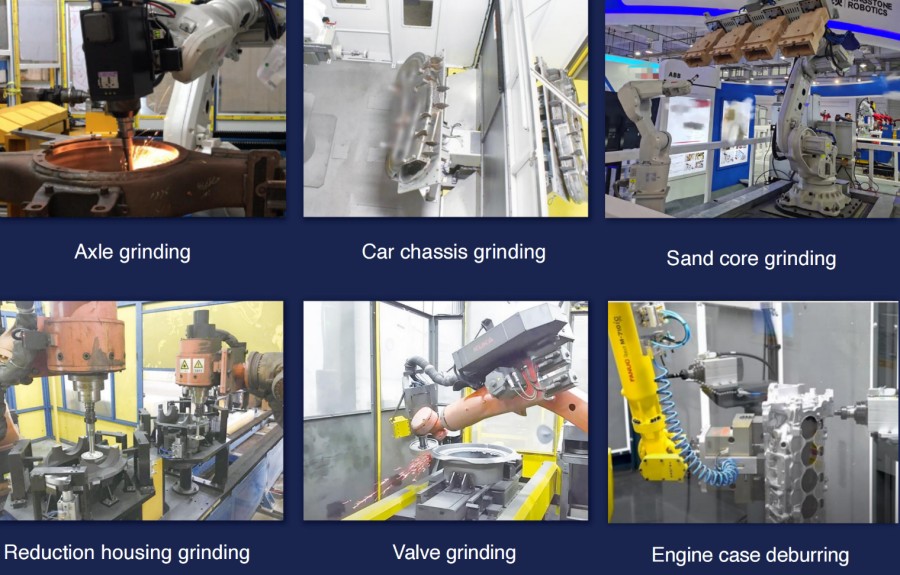
3. Automation and Intelligence
By leveraging industrial robotic platforms, Kingstone Robotics automates the entire grinding and polishing process, minimizing reliance on manual labor while significantly improving production consistency and safety. Their robotic cells are equipped with multi-axis arms, rotary tables, and interchangeable tooling, making them adaptable to a wide variety of component sizes and surface profiles.
In addition to hardware automation, Kingstone systems incorporate intelligent control software. These smart systems feature real-time force sensing, automatic tool wear compensation, and feedback-based process correction. This allows for highly accurate material removal and uniform surface finishes, even on irregular or complex surfaces. These capabilities are especially valuable in sectors such as aerospace, where micrometer-level tolerances and surface quality directly impact component performance and compliance.
Conclusion
Precision grinding remains an essential pillar of modern manufacturing, enabling the production of parts with tight tolerances, exceptional surface finishes, and complex geometries in even the most challenging materials. As industries push toward higher performance standards and stricter quality control, the demand for consistent, high-precision finishing only intensifies.
Kingstone Robotics plays a vital role in this evolution, offering automated grinding and polishing solutions tailored to each industry’s unique requirements. By integrating robotic control, real-time feedback, and modular system design, Kingstone empowers manufacturers to achieve greater accuracy, efficiency, and process reliability.
Serving sectors such as automotive, aerospace, medical devices, and rail manufacturing, Kingstone’s systems are trusted for critical applications where surface quality and dimensional precision are non-negotiable. As manufacturing continues to evolve, Kingstone Robotics remains at the forefront—delivering intelligent finishing technologies that boost productivity, reduce costs, and raise the bar for quality worldwide.