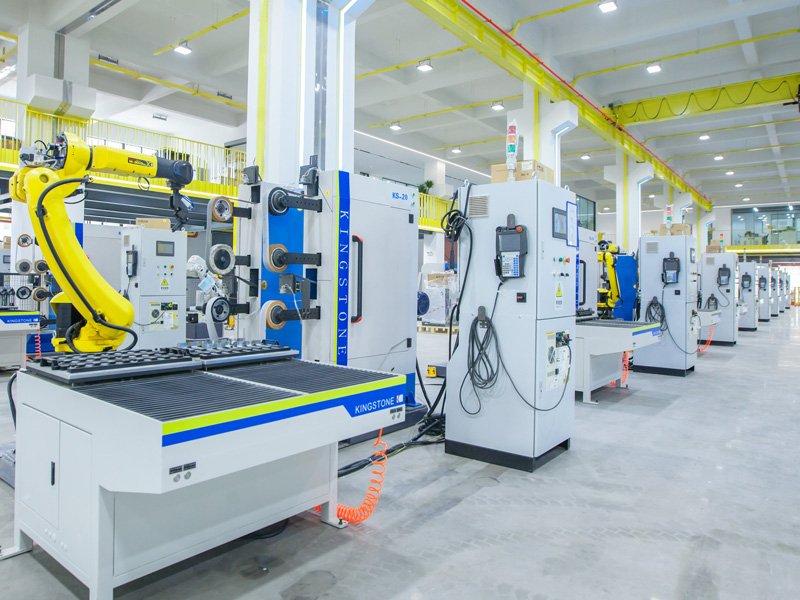
If you’ve ever tried polishing both brass and stainless steel on the same production line, you already know the problem:
What works for one material often ruins the other.
This is especially common in bathroom fixture manufacturing — faucets, shower heads, handles — where both materials are widely used.
Operators keep adjusting pressure, changing polishing wheels, tweaking speeds…
But still struggle with inconsistent finishes.
So the real challenge isn’t just polishing — it’s keeping results consistent across different materials and complex shapes.
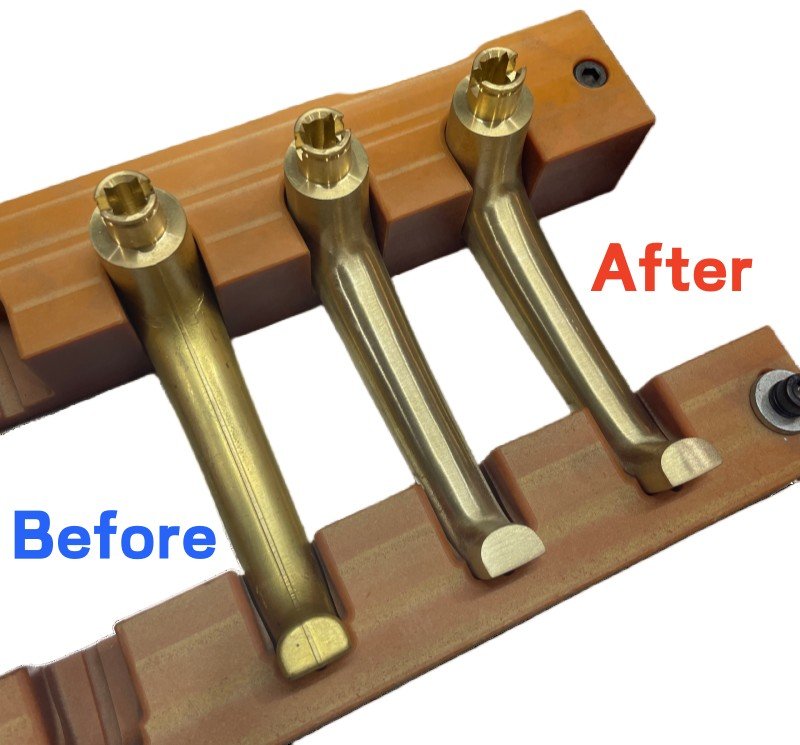
Why Copper Alloys Are “Easy” — Until They’re Not
Copper alloys (like brass) are widely used in sanitary ware.
They’re softer, easier to machine, and look great after polishing.
But in practice, that softness creates problems.
If the pressure is even slightly too high, you’ll start seeing:
- Orange peel texture
- Over-polishing
- Heat marks or deformation
We’ve seen cases where increasing speed to improve efficiency actually made things worse — surface gloss became unstable from batch to batch.
With copper, the issue isn’t cutting — it’s control.
Why Stainless Steel Is a Completely Different Challenge
Now compare that to stainless steel.
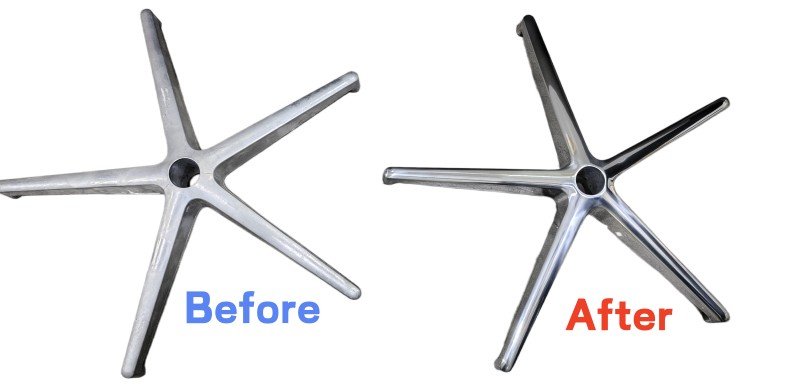
It’s harder, tougher, and much less forgiving during polishing.
Common issues include:
- Grinding wheel clogging
- Surface blackening
- Scratches that won’t go away
And once work hardening happens, every step after that becomes more difficult.
So polishing stainless steel isn’t just about finishing — it’s about managing heat, pressure, and cutting efficiency at the same time.
Why Manual Polishing Struggles With Consistency
In theory, skilled workers can handle both materials.
In reality, it’s extremely difficult to keep results consistent.
Because polishing depends heavily on:
- Hand pressure
- Angle control
- Operator experience
Even small differences between workers can lead to visible quality variations.
This is why many manufacturers face:
- High rework rates
- Inconsistent surface finish
- Increasing labor costs
And when product designs include curved surfaces or deep cavities, the difficulty increases even further.
How Robotic Polishing Solves This Problem
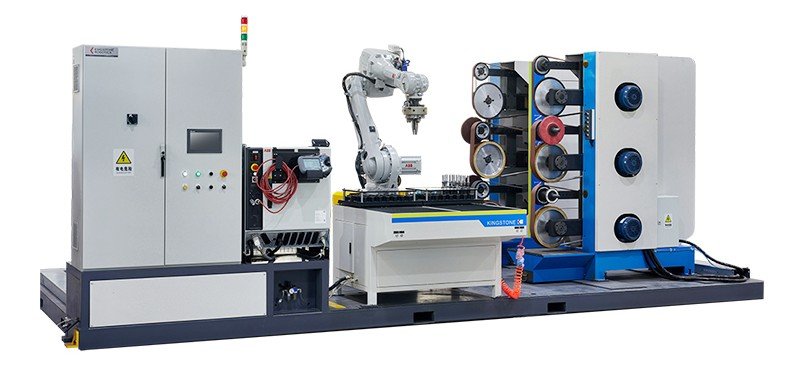
Robotic polishing systems take a completely different approach.
Instead of relying on operator feel, the process becomes controlled and repeatable.
For example:
For copper alloys:
- Low, stable contact force to avoid deformation
- High-speed polishing with controlled pressure
For stainless steel:
- Higher, consistent pressure to handle hardened surfaces
- Optimized abrasive selection to improve cutting efficiency
At the same time, the robot adjusts speed based on part geometry:
- Slower on edges and corners
- Faster on flat surfaces
This level of consistency is extremely difficult to achieve manually.
Real Production Impact
In one project involving brass faucet polishing, a manufacturer was dealing with a rejection rate of around 15%.
The main issues were:
- Uneven gloss
- Over-polishing on edges
After implementing a robotic polishing system:
- Rejection rate dropped below 3%
- Surface consistency improved significantly
- Operators were reassigned to higher-value tasks
This is where automation makes the biggest difference — not just in efficiency, but in predictability and stability.
From Rough Grinding to Mirror Finish — A Standardized Process
Robotic systems also standardize the entire polishing workflow:
1. Rough Grinding
Remove excess material and level the surface
2. Intermediate Polishing
Eliminate scratches and unify surface texture
3. Fine Polishing
Achieve a mirror finish and final gloss
Each step is controlled, repeatable, and optimized for the specific material.
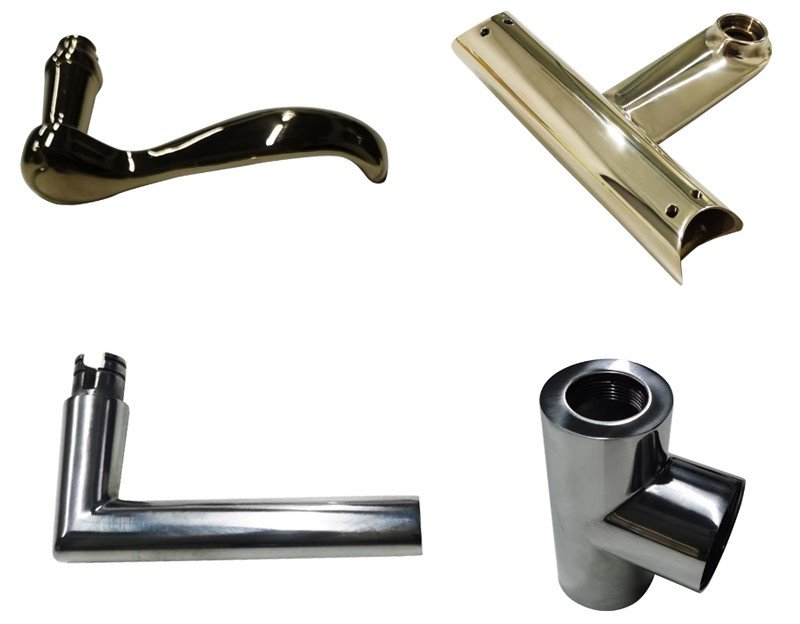
Why More Manufacturers Are Switching to Automation
Polishing different materials isn’t just a technical challenge — it’s a consistency challenge.
And consistency is exactly where manual processes struggle.
That’s why more bathroom fixture manufacturers are adopting robotic polishing systems — not just to reduce labor, but to ensure stable, repeatable quality.
👉 Looking to Improve Your Polishing Process?
If you’re dealing with:
- Inconsistent surface finishes
- High labor costs
- Difficulty polishing complex shapes
A robotic polishing solution may be the next step.
👉 Contact us to discuss your application or request a sample test.