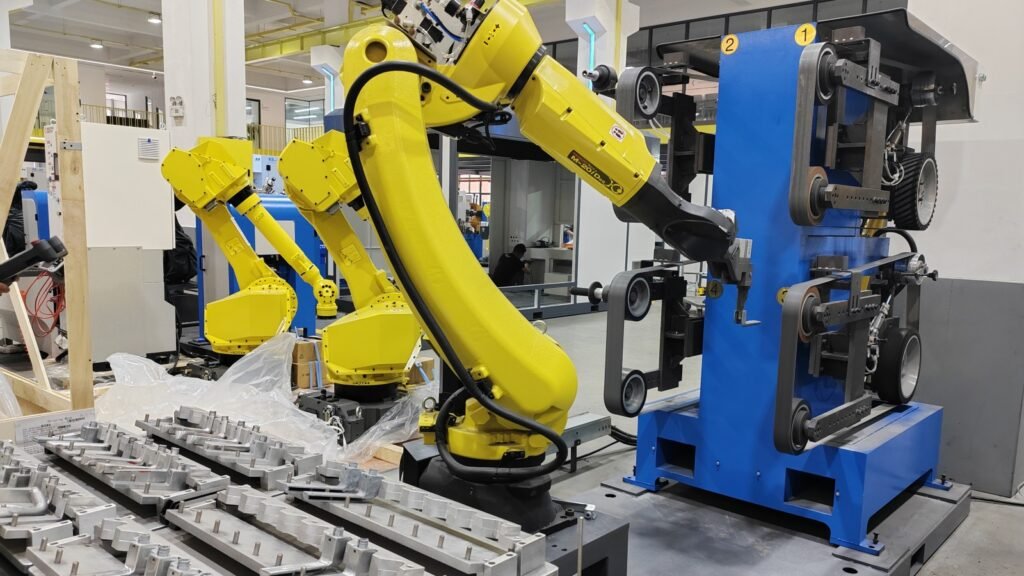
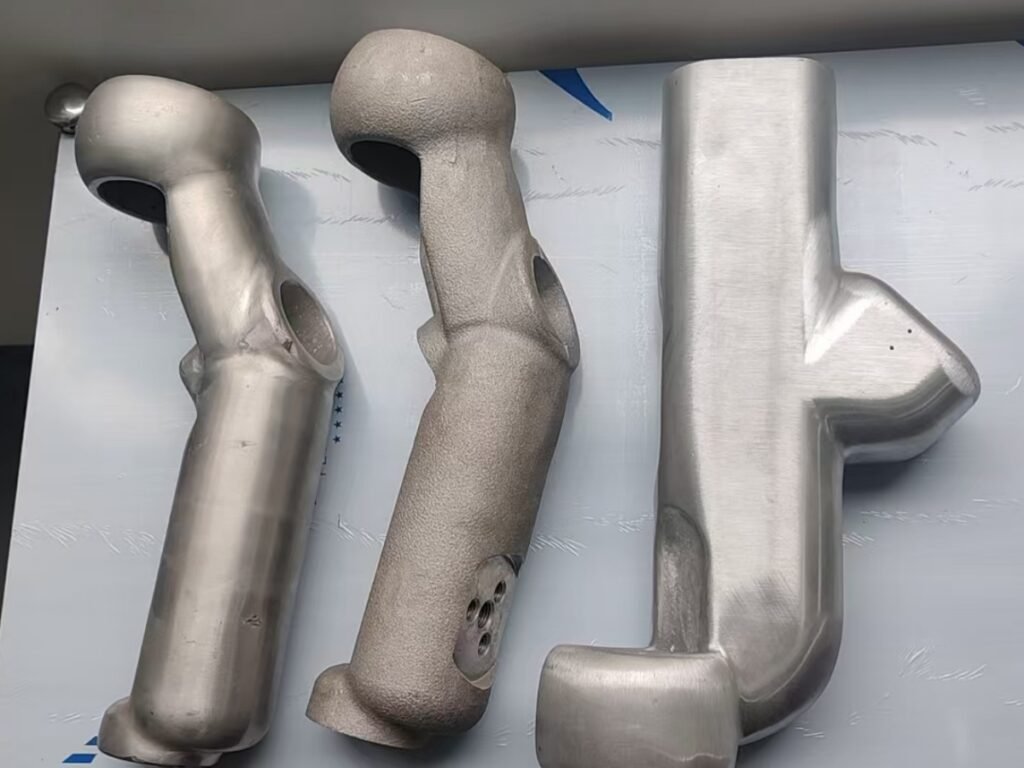
Cast metal parts often require additional grinding before they can move to assembly, machining, coating or other downstream production stages.
Burrs, rough edges and excess material may remain around openings, outer contours and local raised areas. If these areas are ground manually, the result can vary according to the operator’s experience, applied pressure and processing time.
For repeated production, a robotic belt grinding system can make this process more stable. In this type of application, the robot grips the cast part and presents each required area to a stationary belt grinding machine. The robot controls the workpiece path, angle and movement, while the grinding station provides the material-removal force.
The result does not depend on the robot alone. Stable robotic grinding for cast metal parts requires suitable part samples, a repeatable gripper, the correct abrasive belt, controlled contact and a clear finished-part standard.
This guide explains how these elements work together.
Why Cast Metal Parts Need Grinding
A casting may have several areas that require material removal before the part is ready for its next production stage.
Common conditions include:
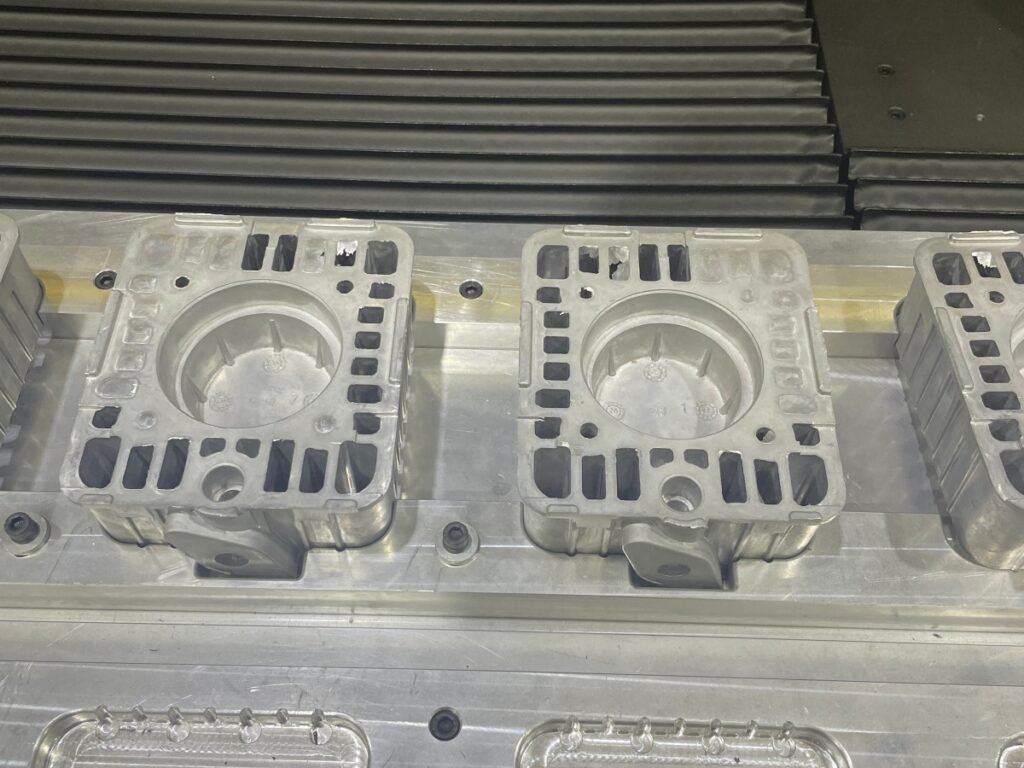
- Sharp burrs around holes, slots and openings
- Rough material along the outer contour
- Excess material remaining at local casting or cutting points
- Raised areas that prevent correct assembly
- Irregular edges that affect handling or downstream processing
- Surface areas that require blending before coating or polishing
These conditions are not always identical on every part. One component may have a small, sharp burr, while another from the same batch may have a thicker area that requires a longer grinding pass.finished parts from being mixed.
The removal target should therefore be based on the actual burr condition and the required final surface rather than on a fixed grinding time alone.
Why Manual Burr Grinding Is Difficult to Standardize
An experienced operator can see the workpiece and adjust the grinding pressure, angle and processing time during each cycle.
This flexibility is useful, but it also makes production dependent on individual judgment.
Common problems include:
- Different operators removing different amounts of material
- Uneven grinding around openings and corners
- Excessive material removal from acceptable surfaces
- Unstable processing time
- Difficulty handling heavy or awkward cast parts
- Abrasive wear being judged differently by each operator
- Exposure to grinding dust, noise and repetitive physical work
When production volume increases, these differences can lead to inconsistent finished parts, additional inspection and repeated manual correction.
Robotic grinding converts the manual process into a defined sequence of workpiece positions, grinding paths and process parameters that can be repeated for every cycle.
How a Robotic Belt Grinding Cell Works
A robotic belt grinding cell for cast metal parts normally combines an industrial robot, a custom gripper, one or more belt grinding stations, a control system and the necessary safety and dust-control equipment.
A typical production cycle can include the following steps.
Step 1: The Raw Part Is Positioned for Loading
The unprocessed cast parts are placed on a positioning tray, fixture or loading station.
The loading position must allow the robot to grip each part consistently. If the casting moves or is placed differently, the robot may present the wrong area to the abrasive belt.
Depending on the production requirements, parts may be loaded manually or supplied through an automated loading system.
Step 2: The Robot Grips the Cast Part
A custom gripper holds the component from suitable locating and clamping areas.
The gripper must hold the casting securely during contact with the abrasive belt while keeping the required grinding areas accessible.
It should also avoid clamping surfaces that could be marked, distorted or damaged.
Step 3: The Robot Presents the Burr to the Abrasive Belt
The robot moves the cast part to the stationary belt grinding machine and controls the contact angle, movement direction and processing path.
Because a cast part may have burrs on several sides, the robot can continuously change the workpiece orientation and present each required area to the belt.
This is one of the main advantages of using a six-axis robot for irregular components.
Step 4: Rough and Fine Grinding Are Completed
A single abrasive belt may not be suitable for every removal stage.
If the burr is thick or the excess material is uneven, a more aggressive belt may be used for the first grinding pass. A finer belt or secondary abrasive station can then blend the treated area and improve the final surface.
The number of grinding stations depends on:
- Incoming burr condition
- Part material
- Required material-removal amount
- Required final surface
- Acceptable cycle time
- Belt life and replacement frequency
The abrasive sequence must be confirmed through actual part testing.
Step 5: The Finished Part Is Unloaded
After all programmed areas have been processed, the robot returns the part to an unloading position, finished-part tray or downstream station.
The production arrangement should prevent unfinished and finished parts from being mixed.
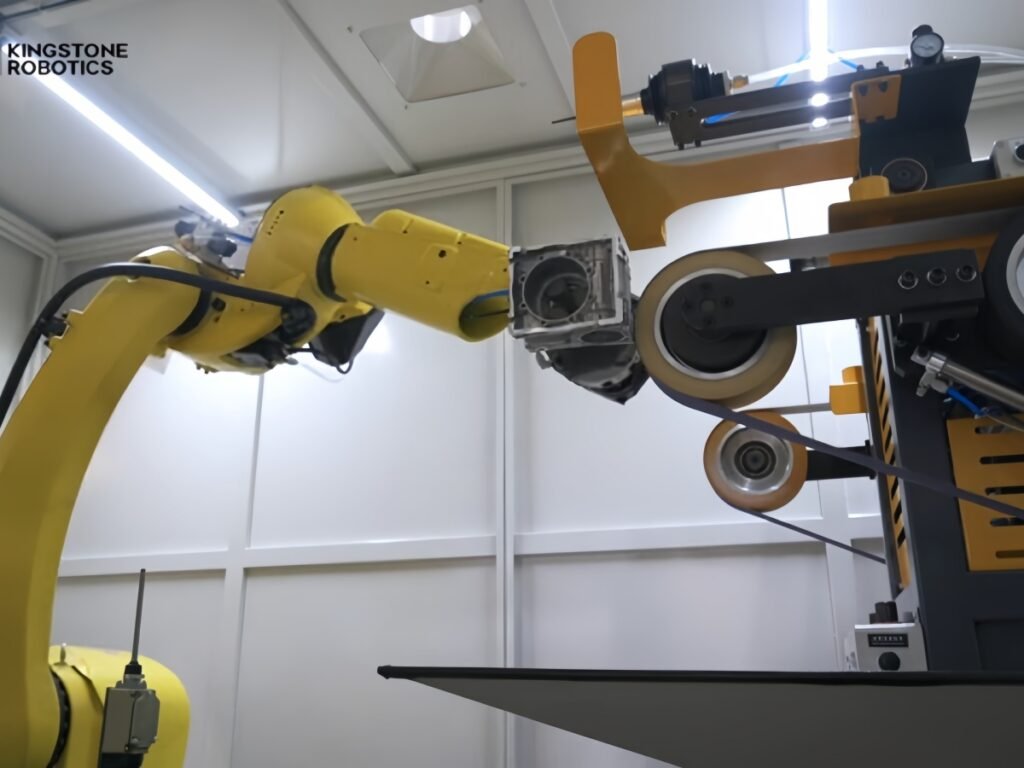
Examples of complete system layouts can be found on our robotic grinding workstation page.
Why the Robot Holds the Workpiece
For small and medium-sized cast parts, allowing the robot to hold the workpiece offers several practical advantages.
The robot can:
- Rotate the part continuously
- Reach several outer faces in one cycle
- Maintain the required approach angle
- Move between different abrasive-belt stations
- Process curved and irregular contours
- Return the part to a consistent unloading position
The belt grinding machine remains fixed, making its abrasive belts easier to inspect, replace and maintain.
This configuration is especially useful when one casting has several burr locations that would otherwise require an operator to repeatedly turn and reposition the part.
However, the robot payload, gripper weight, casting weight, working reach and grinding force must be evaluated together. A robot should not be selected only according to the weight of the part.
Our casting parts grinding solutions show how robots, belt grinding stations and part-handling systems can be combined for different applications.
What Determines a Stable Grinding Result?
Normal Production Samples Matter
One specially selected casting cannot show the full range of conditions found in production.
Parts from different production batches may have changes in:
- Burr size
- Burr location
- Local surface height
- Outer dimensions
- Edge condition
- Casting deformation
Several normal production samples should therefore be tested before the process is finalized.
This allows the supplier to understand the realistic range of parts that the robotic grinding system will face during normal production.
A Stable Gripper and Repeatable Loading Position
The robot repeats its programmed movement relative to the gripper.
If the part moves inside the gripper or is not loaded from the same location, the burr may not meet the abrasive belt at the intended position.
The gripper should:
- Locate the casting from reliable reference surfaces
- Prevent movement during grinding
- Avoid interfering with the required grinding areas
- Provide enough clamping force without damaging the part
- Allow practical loading and unloading
- Support repeatable replacement when different part models are processed
For an irregular cast component, improving the gripper can be more effective than repeatedly modifying the robot path.
The Abrasive Belt Must Match the Part
The belt type and grinding sequence affect both material-removal efficiency and the final surface.
Abrasive selection should consider:
- Casting material
- Burr thickness
- Required removal amount
- Contact area
- Heat generated during grinding
- Required surface after processing
- Downstream coating or polishing requirements
A belt that removes material quickly may leave grinding marks that are too deep for the next process. A belt that is too fine may increase cycle time or fail to remove the burr completely.
For this reason, the abrasive process should be developed using actual parts instead of selecting a belt only from a general specification.
Contact Pressure Must Be Controlled
If the part contacts the abrasive belt with insufficient pressure, some burrs may remain.
If the contact is too aggressive, the process may remove acceptable base material, round an edge excessively or create an unwanted low area.
The grinding result is affected by the combination of:
- Robot path
- Contact angle
- Contact pressure
- Robot movement speed
- Belt speed
- Contact-wheel condition
- Abrasive condition
- Part variation
Mechanical compliance or force-control functions can help maintain more stable contact when the application requires them.
However, contact control cannot correct unlimited variation in the incoming casting. The part, loading position and burr condition still need to remain within the range established during sample testing.
More information about process control, fixtures and system development can be found on our technology page.
Belt Wear Must Be Included in the Process
An abrasive belt does not perform identically throughout its entire service life.
As the belt wears, its cutting ability changes. If the robot continues using exactly the same process without accounting for this change, the finished result and cycle time may gradually become unstable.
Belt-wear management can include:
- Defined inspection intervals
- A belt replacement standard
- Process settings for different belt conditions
- Position or contact compensation
- Production records for abrasive consumption
- Finished-part checks after belt replacement
The replacement point should be based on the required processing result, not only on whether the belt can still rotate.
Dust Collection and Maintenance Access
Grinding produces dust and consumes abrasive belts.
The cell layout should therefore provide suitable access for:
- Belt inspection and replacement
- Gripper maintenance
- Cleaning
- Dust extraction
- Finished-part inspection
- Adjustment and troubleshooting
The enclosure, extraction system and safety design should be developed according to the actual workpiece material and grinding process.
These elements should be included during the original system design rather than added after the equipment has been completed.
Developing the Process from Samples to Production
A robotic grinding project should begin with the actual workpiece and required result.
1. Define the Required Finished Part
The manufacturer and equipment supplier should agree on:
- Which burrs must be removed
- Which areas must not be ground
- The permitted remaining material
- The acceptable edge condition
- The required surface appearance
- Important dimensions that must remain unchanged
- How the finished part will be inspected
“Grind the burrs clean” is not always a sufficiently clear acceptance standard.
2. Review the Current Manual Process
A video of the existing manual grinding process can provide useful information.
It shows:
- Which areas are processed
- The order of operations
- How the operator holds the part
- Which abrasive belts are currently used
- Where the operator changes pressure or angle
- How long the current process takes
The manual process does not need to be copied exactly, but it provides a practical starting point for robotic process testing.
3. Test Actual Cast Parts
Different belts, contact conditions and grinding paths are tested on representative samples.
The objective is to remove the burr efficiently while protecting the required geometry and surface of the casting.
Testing should include parts with normal production variation, not only the easiest sample.
4. Design the Gripper and Cell Layout
After the grinding method is confirmed, the gripper, robot position, belt grinding stations, loading area and safety enclosure can be designed around the process.
The layout should allow the robot to reach every required area without creating unnecessary movements or collisions.
5. Develop the Robot Program
The robot program defines the workpiece orientation, grinding paths, movement speed and sequence between different belt stations.
Separate paths or programs may be required for different burr locations or part models.
6. Verify the Process Under Production Conditions
Before final acceptance, the system should process a representative group of castings using the agreed loading method, abrasive sequence and inspection standard.
The evaluation should cover:
- Burr-removal consistency
- Finished surface condition
- Cycle stability
- Gripper performance
- Belt replacement
- Loading and unloading
- Normal operator tasks
This provides a more reliable assessment than checking only one finished sample.
What Cast Metal Parts Are Suitable?
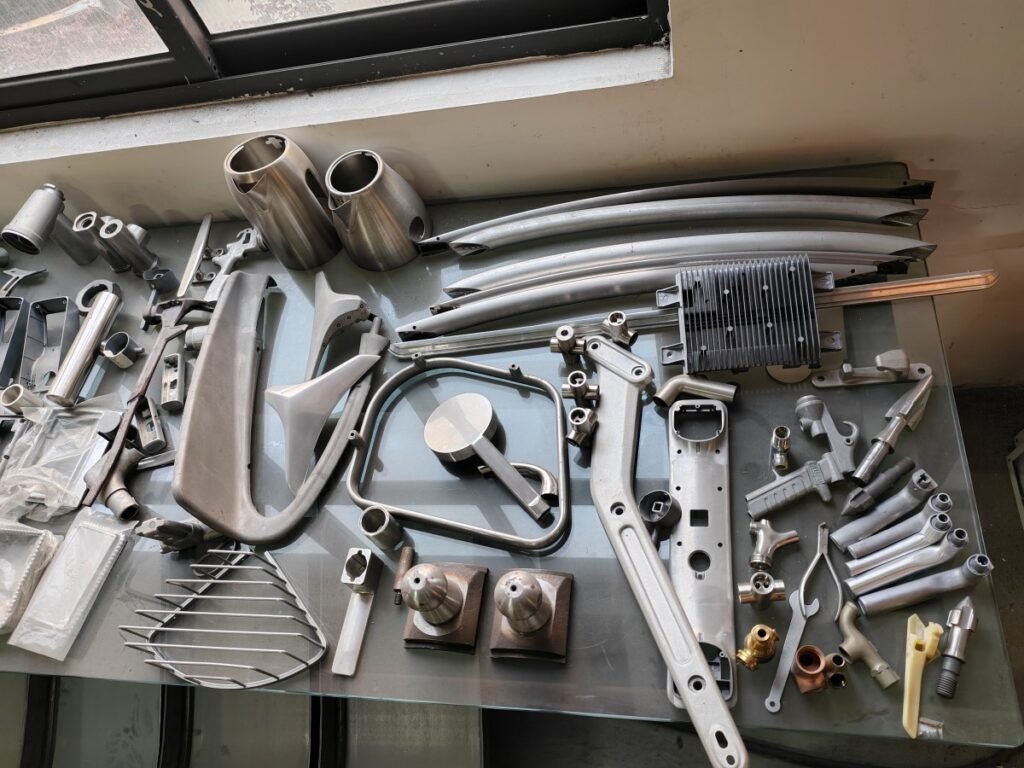
Robotic belt grinding can be evaluated for repeated cast components such as:
- Aluminum die-cast housings
- Zinc-alloy cast components
- Cast iron brackets and machine parts
- Steel castings
- Brass and bronze hardware
- Automotive cast components
- Pump and valve bodies
- Gearbox and engine housings
- Door and furniture hardware
- Other components with repeated burr locations
Parts with several external faces and changing angles can be good candidates because the robot can continuously reposition them during grinding.
Parts with deep internal areas or surfaces blocked by the gripper may require a different tool arrangement or additional processing method.
For a broader feasibility review, see our guide to metal parts suitable for robotic surface finishing.
When Is a Part Not Yet Ready for Robotic Grinding?
Additional development may be needed when:
- Burrs appear in unpredictable locations
- Burr size varies far beyond the tested range
- The casting cannot be loaded repeatably
- Required grinding areas are inaccessible
- Part geometry changes frequently
- The finished-part standard has not been defined
- Production batches are too small for practical fixture and programming work
- Upstream casting problems continue changing the workpiece shape
Some of these problems can be addressed through improved casting control, better positioning, additional fixtures or separate robot programs.
The correct solution should be determined after reviewing normal production parts.
What Information Is Needed for an Evaluation?
For an initial robotic grinding evaluation, provide:
- Clear photos of the complete cast part
- Close-up photos of the burrs
- A 2D or 3D drawing
- Part material
- Part dimensions and weight
- Burr locations
- Current manual grinding process
- Abrasive belts currently being used
- Current processing time
- Required production quantity
- Required finished surface
- Areas that must not be ground
- Several normal production samples
A short video showing the manual grinding process is also helpful.
With this information, the supplier can evaluate the gripping method, robot payload, belt grinding configuration and required process-testing work.
Frequently Asked Questions
Can robotic belt grinding remove large casting burrs?
It depends on the burr thickness, material and required final surface.
A large burr may require an aggressive first grinding stage followed by a finer blending stage. Actual samples should be tested before the process is confirmed.
Can one robotic grinding machine process different cast parts?
Yes, when the parts have compatible sizes, weights and grinding requirements.
Different robot programs and replaceable grippers can be used. However, changeover time and access to each grinding area should be evaluated before several unrelated products are combined in one cell.
Why can’t the robot use the same rigid path for every casting?
The robot can repeat the same path accurately, but cast parts may have small differences in burr height, surface position and overall dimensions.
The gripper, contact method and process settings need to accommodate the tested range of variation.
How many abrasive-belt stations are required?
There is no fixed number.
The system may use one belt for a simple grinding operation or several stations for rough removal and finer surface blending. The required number should be determined through sample testing.
How is the grinding cycle time calculated?
Cycle time depends on the number of grinding areas, burr size, abrasive sequence, robot movement, loading method and required finished result.
A reliable estimate should be based on process testing with actual parts.
How should the finished result be approved?
The manufacturer and supplier should first agree on the required burr condition, protected surfaces and inspection method.
Representative parts can then be processed and compared with the approved sample or acceptance standard.
Final Thoughts
Robotic grinding for cast metal parts is a complete process rather than simply a robot moving in front of a belt grinding machine.
The cast part, gripper, abrasive belt, grinding path, contact condition and acceptance standard must be developed together. When the process is tested with normal production samples, a robotic belt grinding system can provide more repeatable burr removal and reduce dependence on difficult manual grinding work.
If you are evaluating robotic grinding for a cast component, contact our engineering team with your part photos, drawings, burr details and production requirements. We can review the application and recommend an appropriate sample-testing and system configuration.